- Your cart is empty
- Continue Shopping

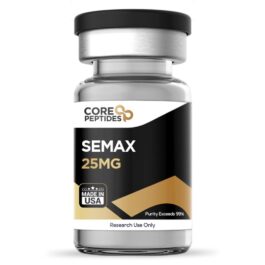

Research Peptide Quality Guide

A vial label can say 99% purity, sterile, and research use only, yet still tell you almost nothing about whether the material was produced, handled, and verified to a serious standard. That is why a research peptide quality guide matters. In this market, the real difference is not the marketing language. It is the documentation behind the batch, the testing behind the claim, and the consistency behind the supplier.
For experienced buyers, the problem is rarely finding peptides for sale. The problem is finding a source that can support its quality claims without hesitation. If a supplier cannot clearly explain its manufacturing standards, sterility controls, endotoxin expectations, and batch-specific testing, the risk shifts to the buyer. That is not a small issue when you are comparing compounds, planning repeat purchases, or sourcing in bulk.
What a research peptide quality guide should actually cover
A serious research peptide quality guide should focus on verification, not hype. Purity is one part of the picture, but it is not the whole picture. A peptide can show a high purity result on a single test and still raise concerns if the batch lacks identity confirmation, was handled poorly after production, or comes with incomplete documentation.
Quality starts with source control. That means understanding whether the peptide was manufactured in GMP-certified or GMP-compliant facilities, whether the process follows controlled procedures, and whether the batch can be traced from production through packaging. A supplier that works with FDA-registered manufacturers or tightly managed production partners generally has a stronger quality foundation than a seller relying on vague sourcing claims.
Testing is the next layer. Third-party COAs matter because they provide independent confirmation rather than internal marketing copy. But even here, buyers should look past the existence of a certificate and assess whether it appears current, batch-specific, and aligned with the product actually being sold. A generic certificate with no clear lot reference is not the same as a transparent, product-level record.
Then there is handling. Sterility claims, endotoxin-free standards, and proper storage are not interchangeable terms. Sterile processing addresses contamination risk during production and filling. Endotoxin controls address pyrogen concerns. Proper storage and fulfillment practices protect the compound after it leaves the lab. A reliable supplier treats all three as part of one quality system.
The quality signals that separate serious suppliers from risky ones
The strongest suppliers tend to be transparent in the same ways. They make batch documentation accessible. They do not hide behind broad claims like pharma-grade if they cannot show the supporting framework. They explain how products are tested, where they are manufactured, and how they are packaged and shipped.
Third-party testing should be easy to verify. If a buyer has to request basic proof that should already be visible, that is a friction point worth noticing. The same goes for COAs that look outdated, incomplete, or disconnected from the listed product. In a high-trust category, hesitation around documentation is a red flag.
Fulfillment reliability also says a lot about quality discipline. Same-day processing, discreet shipping, secure packaging, and clear customer support may sound operational rather than technical, but they reflect whether the business runs with control. A company that is careless about orders is often careless elsewhere. Buyers sourcing premium peptides usually understand this instinctively.
Responsive human support is another marker. If a supplier can answer direct questions about batch testing, manufacturing standards, storage expectations, and availability without scripted vagueness, that usually indicates stronger internal processes. Serious operators do not treat quality questions like a nuisance.
How to read a COA without overestimating it
Certificates of analysis are essential, but buyers should treat them as evidence, not magic. A COA can confirm important details, yet it does not erase every risk. The key is knowing what it can tell you and what it cannot.
At minimum, a useful COA should connect to a specific batch or lot and identify the compound clearly. It should reflect testing performed by a credible third-party lab, ideally an ISO-certified laboratory. Purity results matter, but they should be interpreted alongside identity confirmation and any additional microbial, sterility, or endotoxin-related testing where applicable.
What a COA does not prove on its own is that every step before and after testing was equally controlled. That is why documented manufacturing standards and handling procedures still matter. A supplier with strong COAs and weak process discipline is still a compromise. The better model is both: verified testing and credible operational controls.
For repeat buyers, consistency across batches is often more valuable than a single impressive result. If one lot tests clean and the next one is harder to document, the issue is not only quality. It is reliability. Buyers running ongoing research programs or bulk purchasing plans need a supplier that can deliver stable standards, not occasional reassurance.
Why sterility and endotoxin standards deserve closer attention
In peptide sourcing, purity tends to get the headline while sterility and endotoxin controls get buried in the fine print. That is backward. For many buyers, these factors are part of what separates a premium source from a commodity listing.
Sterile handling should reflect controlled filling and packaging practices, not just a label claim. Endotoxin-free standards indicate another level of attention to contamination risk. Not every seller has the infrastructure or discipline to support these standards consistently, which is why documented claims matter more than promotional language.
There is also a trade-off here. Higher-control manufacturing, better testing, and stronger handling standards usually cost more. Buyers looking only for the lowest price often end up comparing products that are not equivalent. A lower price may be attractive on the surface, but if the documentation is weak, the batch traceability is unclear, or the support is nonexistent, the cost advantage can disappear quickly.
The role of manufacturing standards in peptide quality
Manufacturing claims should be specific. GMP-certified facilities, GMP-compliant production, and FDA-registered manufacturing partners all signal a more serious quality environment, but they are not interchangeable and should not be used casually. The practical question is whether the supplier can explain the standard it references and apply it consistently across its catalog.
This matters even more in a multi-brand marketplace model. When a supplier carries several peptide brands and compound categories, the burden of consistency gets higher, not lower. Buyers should expect clear sourcing standards across blends, raw peptide powders, and specialized research compounds rather than a patchwork of quality claims.
A broad catalog can be a strength if the platform vets its brands carefully and maintains the same expectations around testing, documentation, and fulfillment. Without that discipline, variety becomes noise. With it, buyers gain flexibility without giving up trust.
Buying decisions that reduce quality risk
Experienced peptide buyers do not need dramatic promises. They need predictable standards. That means looking for product pages that provide direct access to COAs, clear quality language around sterility and endotoxin standards, and realistic information about shipping, support, and order processing.
It also means asking practical questions. Is the testing third-party and batch-specific? Are manufacturing claims concrete or vague? Does the supplier offer real customer support through phone, text, email, or WhatsApp when you need clarification? Are bulk options available for repeat procurement without sacrificing traceability?
The best suppliers answer those questions before the customer has to chase them. That approach reduces uncertainty and shortens the distance between trust and checkout. For buyers who value speed, discretion, and premium quality, that is not a convenience feature. It is part of the quality experience.
Core Peptides Meds is built around that standard: third-party verification, transparent documentation, premium sourcing expectations, and fulfillment systems designed for serious U.S. buyers who do not want to guess what they are receiving.
Research peptide quality guide for long-term buyers
If you buy once, you might get lucky with a weak supplier. If you buy regularly, luck is not a strategy. A dependable research peptide quality guide should lead you toward suppliers that treat purity, sterility, endotoxin control, documentation, and fulfillment as one connected system.
That is how trust is earned in this category. Not with louder claims, but with cleaner processes, visible proof, and consistent execution. When a supplier can show the batch, explain the standard, and deliver without friction, the buying decision gets simpler for the right reasons.
The smartest peptide purchase is usually not the one with the biggest claim or the lowest price. It is the one backed by evidence you can verify and service you can rely on when the next order matters just as much as the first.
