- Your cart is empty
- Continue Shopping


Are Peptides Safe? What Buyers Should Know
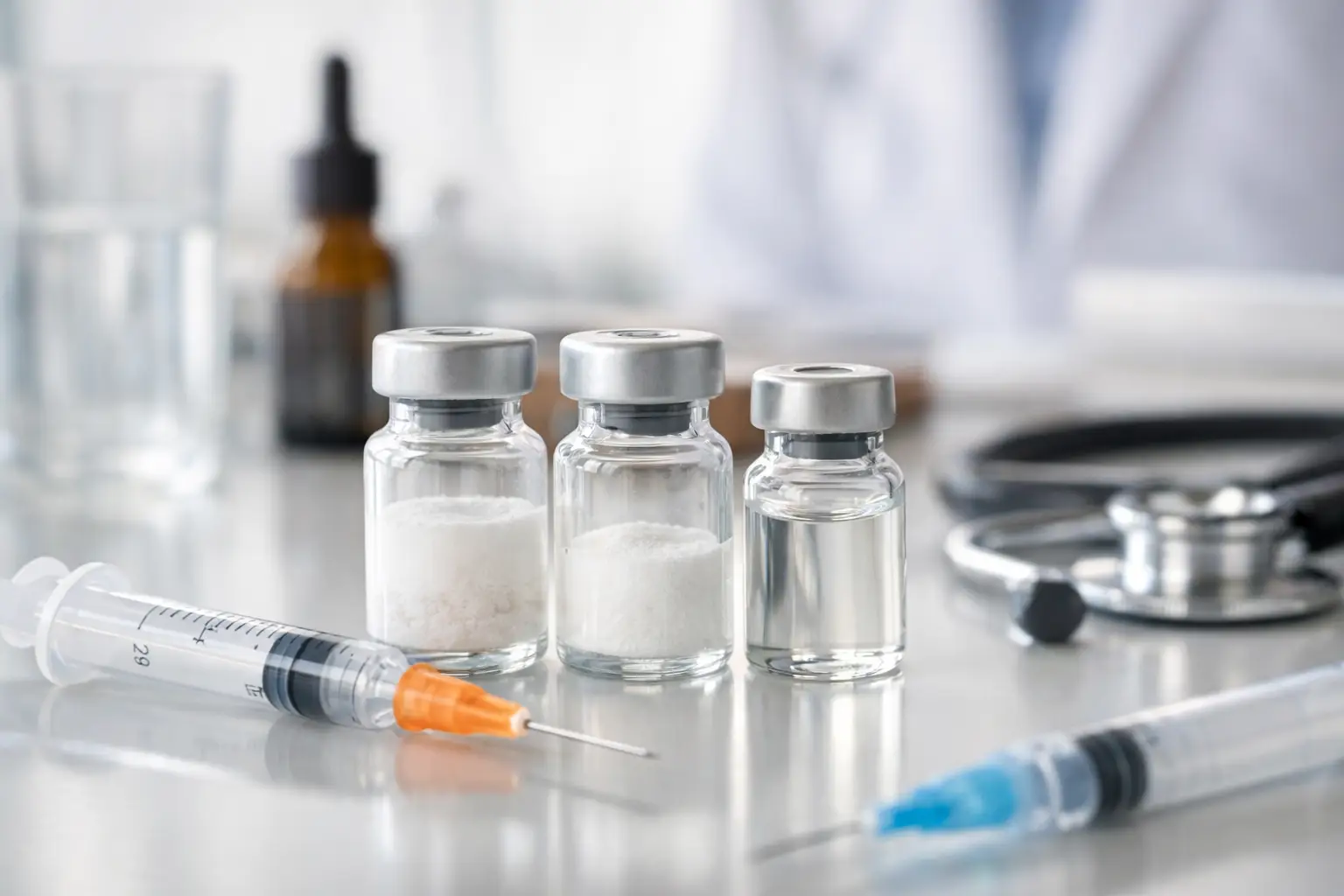
A peptide is only as safe as its identity, purity, and handling. That is the real answer behind the question, are peptides safe. Buyers who already know the category also know the market problem – two vials can carry the same label and offer completely different risk profiles depending on manufacturing controls, third-party verification, and storage standards.
That distinction matters more than marketing language. In a category crowded with under-documented products, safety is not a vague promise. It comes down to batch-level evidence, clean manufacturing, sterility practices, endotoxin controls, and whether the supplier can show what is actually in the vial.
Are peptides safe in general?
Peptides are short chains of amino acids, and many are studied because they interact with highly specific pathways. That does not automatically make them safe, and it does not automatically make them dangerous. Safety depends on the specific compound, the intended research context, the amount used, the route of administration, the condition of the material, and the quality controls behind it.
A well-characterized peptide produced in a GMP-compliant environment and verified by an ISO-certified third-party lab is in a different category from an unverified product with no certificate of analysis. The chemistry may look similar on paper, but the real-world risk is not the same.
This is where experienced buyers usually separate from casual shoppers. The question is not just whether peptides as a class can be used safely. The better question is whether a specific peptide from a specific supplier has been manufactured, tested, packaged, and shipped in a way that reduces avoidable risk.
What actually determines peptide safety
The first factor is identity. If a vial is labeled BPC-157, CJC-1295, Tesamorelin, Semax, Selank, or a GLP-1 research peptide, the contents should match that label exactly. Mislabeling is one of the fastest ways safety breaks down, because every downstream decision rests on knowing what compound is present.
The second factor is purity. Even when the correct peptide is present, residual solvents, synthesis byproducts, bacterial contamination, or excessive endotoxin levels can change the safety profile. A peptide that tests at high purity with controlled endotoxin limits is not equivalent to one that has no credible testing behind it.
The third factor is sterility and handling. This is especially relevant for lyophilized products and compounds that require careful storage. Poor fill-finish practices, weak environmental controls, or sloppy packaging can compromise an otherwise legitimate batch.
The fourth factor is stability. Peptides are sensitive materials. Temperature excursions, moisture exposure, repeated freeze-thaw cycles, and improper reconstitution can degrade the compound. A degraded peptide may not simply lose effectiveness. It can also become less predictable.
The fifth factor is source transparency. Serious suppliers provide third-party COAs, batch references, and manufacturing information that can be checked. Weak suppliers rely on generic claims, recycled documents, or no documentation at all.
The biggest safety risks are usually upstream
Most peptide safety problems begin long before a product reaches the customer. They start in raw material sourcing, synthesis, filtration, filling, packaging, or testing. If a manufacturer cuts corners, the label may still look polished. The risk stays hidden until the product is analyzed or performs inconsistently.
This is why low pricing alone should never be treated as a safety signal. In this market, unusually cheap product often reflects compromises in testing frequency, manufacturing controls, or storage logistics. That does not mean every higher-priced peptide is better. It means verified quality has a cost, and buyers should understand what that cost is paying for.
For experienced purchasers, a reliable safety screen starts with documentation. Look for batch-specific certificates of analysis, not just a sample report posted once and reused indefinitely. Check whether testing is performed by an independent lab. Review whether purity, identity, and endotoxin data are actually shown. If the supplier cannot provide clear evidence, the risk shifts to the buyer.
Are peptides safe when the supplier is verified?
Verification improves the odds, but it does not create a blanket guarantee. Even with strong sourcing standards, every peptide has its own profile. Some compounds are studied more extensively than others. Some are more stable in storage. Some require more careful handling, tighter environmental control, or more rigorous screening for impurities.
Still, supplier verification is one of the biggest variables a buyer can control. A trusted source should be able to explain where products are made, whether production follows GMP-certified or GMP-compliant standards, whether facilities are FDA-registered where applicable, and whether independent lab testing confirms lot quality. Those details are not filler. They are the foundation of safer procurement.
At Core Peptides Meds, that expectation is built into how serious buyers evaluate products – not by label design or hype, but by documentation, sterility standards, third-party COAs, and supply-chain consistency.
Red flags that should stop a purchase
If a peptide seller offers no COA, no lot traceability, and no clear testing language, that is a problem. If every product has the same generic purity claim with no batch variation, that is another problem. If support cannot answer basic questions about storage, testing, or manufacturing, assume the operational controls are weak behind the scenes too.
Another red flag is vague use of pharmaceutical language without proof. Terms like pharmaceutical-grade, lab tested, or premium quality should be backed by evidence. Without documents, they are just sales copy.
Discreet shipping, fast fulfillment, and convenient checkout are useful benefits, but they are not safety signals by themselves. Operational reliability matters. It just should come after verification, not instead of it.
How experienced buyers reduce peptide safety risk
Sophisticated buyers tend to use the same screening logic repeatedly. They confirm the exact compound, review the batch-specific COA, look for independent testing, and verify that storage and shipping practices make sense for the product category. They also avoid treating all peptides as interchangeable.
That last point matters. A GLP-1 research peptide, a growth hormone-related peptide, a recovery compound, and a nootropic peptide do not carry identical handling demands or purchasing considerations. Grouping them together under one broad safety assumption is a mistake.
It also helps to buy from suppliers with broad catalog depth and clear quality systems, because that usually reflects more structured sourcing relationships and repeatable operational processes. A seller handling multiple peptide classes, bulk volumes, and serious buyer demand should be able to support that scale with documentation and responsive human support.
Safety is not just about the peptide itself
Even a clean, correctly identified peptide can become risky if it is mishandled after purchase. Improper storage, poor reconstitution technique, contamination during handling, or ignoring product-specific requirements can all undermine quality. That is why responsible sourcing and responsible handling have to work together.
There is also the issue of expectations. Buyers sometimes ask broad yes-or-no questions because they want a single answer. Peptide safety does not work that way. The honest answer is conditional. It depends on the peptide, the quality controls, the documentation, the storage chain, and whether the supplier operates with traceable standards.
That may sound less convenient than a simple promise, but it is far more useful. In a market where weak sourcing is common, clear standards are what protect the buyer.
The better question to ask before you buy
Instead of asking only, are peptides safe, ask whether this peptide from this supplier has the verification to justify confidence. Can the seller provide current third-party COAs? Do they emphasize sterility and endotoxin-free standards? Are manufacturing claims specific and credible? Is customer support responsive enough to answer technical questions before purchase, not just after checkout?
When those answers are clear, risk becomes more manageable. When they are missing, the product is not a bargain. It is an uncertainty.
For buyers who care about purity, consistency, and fast reliable fulfillment, safety starts with refusing to compromise on evidence. The smartest purchase is usually the one backed by testing you can review, standards you can verify, and a supplier confident enough to be transparent before you ever place the order.
