- Your cart is empty
- Continue Shopping

$129.00
31 in stock
Thymosin Alpha-1 (Tα1) is a naturally occurring 28-amino acid peptide originally isolated from thymosin fraction 5, a partially purified extract of calf thymus tissue [1]. This acetylated peptide has a molecular weight of approximately 3,108 Daltons and plays a significant role in immune system regulation, particularly in the maturation and differentiation of T-lymphocytes [2,3]. The synthetic version has been approved in several countries (though not in the United States) under the brand name Zadaxin for specific immune-related indications, providing a substantial body of clinical data for researchers studying immune function and therapeutic immunomodulation [4,5].
Animal studies have demonstrated that thymosin alpha-1 influences multiple aspects of immune function. In murine models, Tα1 administration enhanced T-cell maturation in the thymus, increased production of interleukin-2 (IL-2) and interferon-gamma (IFN-γ), and improved response to immune challenges [6,7]. Rodent studies have shown that Tα1 can modulate both innate and adaptive immune responses through actions on dendritic cells, natural killer cells, and various T-cell subpopulations [8,9]. In vitro studies using human peripheral blood mononuclear cells (PBMCs) have demonstrated that Tα1 enhances T-cell proliferation, increases expression of IL-2 receptors, and promotes differentiation of T-helper cells [10,11]. Cell culture research has also indicated effects on toll-like receptor (TLR) signaling pathways and modulation of cytokine production patterns [12,13].
Chronic Hepatitis B and C: Multiple clinical trials have investigated thymosin alpha-1 in chronic viral hepatitis. A meta-analysis of randomized controlled trials in chronic hepatitis B showed that Tα1 treatment was associated with increased rates of HBeAg seroconversion and HBV DNA clearance compared to controls [14,15]. In chronic hepatitis C, clinical trials examining Tα1 as monotherapy or in combination with interferon-alpha showed mixed results, with some studies demonstrating improved sustained virological response rates [16,17]. Cancer Immunotherapy Research: Clinical investigations have explored thymosin alpha-1 as an adjuvant in various cancer types. Studies in melanoma patients showed that Tα1 administration was associated with improved T-cell function markers and, in some trials, prolonged survival when combined with conventional therapies [18,19]. Research in hepatocellular carcinoma, non-small cell lung cancer, and other malignancies has examined Tα1’s potential to enhance immune surveillance and reduce treatment-related immunosuppression [20,21,22]. Severe Sepsis and Respiratory Infections: Clinical trials in sepsis patients have investigated whether Tα1 can modulate the dysregulated immune response characteristic of severe infection. A meta-analysis of trials in severe sepsis suggested potential mortality benefits, though individual study quality and endpoints varied [23,24]. Studies in severe acute respiratory infections have examined effects on inflammatory markers, lymphocyte counts, and clinical outcomes, with varying results across different viral etiologies [25,26].
Clinical trial data for thymosin alpha-1 shows considerable heterogeneity in study design, dosing protocols, patient populations, and outcome measures. While generally well-tolerated in clinical studies with adverse effects typically mild (injection site reactions, mild fever), long-term safety data remains limited [27]. Thymosin alpha-1 is not FDA-approved in the United States for any indication, though it has regulatory approval in some Asian and European countries [4,5].
Thymosin alpha-1’s primary characterized mechanism involves effects on T-lymphocyte biology. Research has demonstrated that Tα1 promotes differentiation of precursor T-cells in thymic tissue and influences peripheral T-cell populations [2,3,6]. In vitro studies show that Tα1 enhances expression of T-cell surface markers including CD4, CD8, and IL-2 receptors [10,28]. Animal studies have shown that Tα1 can partially restore T-cell function in immunocompromised models, including aged animals and those with chemically-induced immunosuppression [29,30].
Research has characterized thymosin alpha-1’s effects on cytokine networks. In vitro studies demonstrate that Tα1 increases production of Th1-type cytokines including interleukin-2 (IL-2), interferon-gamma (IFN-γ), and interleukin-12 (IL-12), while modulating Th2-type cytokine production [11,31]. This Th1/Th2 balance modulation has been studied in various disease contexts including viral infections and cancer. Cell culture research indicates Tα1 influences toll-like receptor (TLR) signaling, particularly TLR-2 and TLR-9 pathways involved in innate immune recognition [12,13].
Preclinical studies have shown that thymosin alpha-1 affects dendritic cell maturation and antigen-presenting function. In vitro research demonstrates that Tα1 enhances dendritic cell maturation markers, increases expression of major histocompatibility complex (MHC) molecules, and improves antigen presentation capacity [32,33]. These effects on professional antigen-presenting cells may contribute to enhanced adaptive immune responses observed in research models.
Research investigating Tα1 in oncology has focused on its potential to enhance tumor immune surveillance and counteract cancer-related immunosuppression. Studies have examined effects on tumor-infiltrating lymphocytes, natural killer cell activity, and reversal of T-cell anergy in tumor microenvironments [34,35]. In vitro studies have also suggested that thymosin alpha-1 may possess direct antimicrobial properties beyond immune modulation, with potential antibacterial effects against certain gram-positive and gram-negative organisms, as well as antifungal activity in some experimental systems [36,37].
Thymosin alpha-1 is a 28-amino acid peptide with the sequence: Ac-Ser-Asp-Ala-Ala-Val-Asp-Thr-Ser-Ser-Glu-Ile-Thr-Thr-Lys-Asp-Leu-Lys-Glu-Lys-Lys-Glu-Val-Val-Glu-Glu-Ala-Glu-Asn-OH [1,38]. The N-terminus is acetylated (Ac-), which is critical for biological activity, as removal of the acetyl group significantly reduces immunological function [39]. The peptide contains a high proportion of acidic amino acids (aspartic acid and glutamic acid), contributing to its overall negative charge at physiological pH [38]. Thymosin alpha-1 is derived from prothymosin alpha, a 113-amino acid protein found in high concentrations in thymic tissue. Proteolytic processing of prothymosin alpha yields thymosin alpha-1 as the N-terminal fragment [40]. In vivo, Tα1 is produced primarily in the thymus gland, which plays a central role in T-lymphocyte development and immune system maturation. Endogenous thymosin alpha-1 levels decline with age, correlating with thymic involution and age-related immunosenescence [41]. Research-grade and pharmaceutical thymosin alpha-1 is produced through solid-phase peptide synthesis (SPPS), allowing precise control over sequence and modifications including the critical N-terminal acetylation [42]. Synthetic Tα1 is identical in structure to the naturally occurring peptide and exhibits equivalent biological activity.
The primary characterized mechanism of thymosin alpha-1 involves modulation of T-lymphocyte biology through multiple pathways [2,3]. In preclinical models, Tα1 promotes differentiation of immature thymocytes into mature T-cells expressing appropriate surface markers (CD4, CD8, TCR) [6,43]. In vitro studies demonstrate that Tα1 enhances T-cell receptor (TCR) signaling, increasing calcium mobilization and downstream activation cascades [44]. Research shows Tα1 increases both IL-2 production and IL-2 receptor (CD25) expression on T-cells, creating an autocrine amplification loop that enhances T-cell expansion [10,11].
Studies have demonstrated that thymosin alpha-1 modulates innate immune function through toll-like receptor (TLR) pathways [12,13]. In vitro research indicates Tα1 enhances signaling through specific TLR pathways involved in bacterial and viral recognition, including increased expression of TLR co-receptors and enhanced downstream NF-κB activation [12]. Tα1 promotes dendritic cell maturation partly through TLR-mediated pathways, increasing expression of co-stimulatory molecules (CD80, CD86) and MHC class II, which enhances antigen presentation capacity [32,33].
Thymosin alpha-1 influences cytokine production patterns through multiple mechanisms [11,31]. In vitro and in vivo studies show increased production of Th1-associated cytokines (IL-2, IFN-γ, IL-12), which are critical for cell-mediated immunity against intracellular pathogens and tumor cells [31,45]. Research has characterized thymosin alpha-1’s effects on interferon production and signaling, showing Tα1 increases production of IFN-α and IFN-β from plasmacytoid dendritic cells and other immune cells [46]. Through effects on T-cells and NK cells, Tα1 enhances IFN-γ production, which activates macrophages and promotes cell-mediated immunity [45].
Preclinical studies have demonstrated effects on innate cytotoxic mechanisms. In vitro research shows Tα1 enhances natural killer cell cytotoxicity against tumor cells and virus-infected cells, potentially through increased perforin and granzyme expression [47]. Studies indicate Tα1 improves CTL-mediated killing, which is relevant to antiviral and antitumor immunity [48]. While thymosin alpha-1 clearly affects immune cell function, the precise molecular receptors and intracellular signaling pathways remain incompletely characterized. Research has suggested potential mechanisms including interaction with intracellular TLR pathways following cellular uptake, modulation of protein kinase C (PKC) signaling, and effects on calcium signaling in immune cells [49,50].
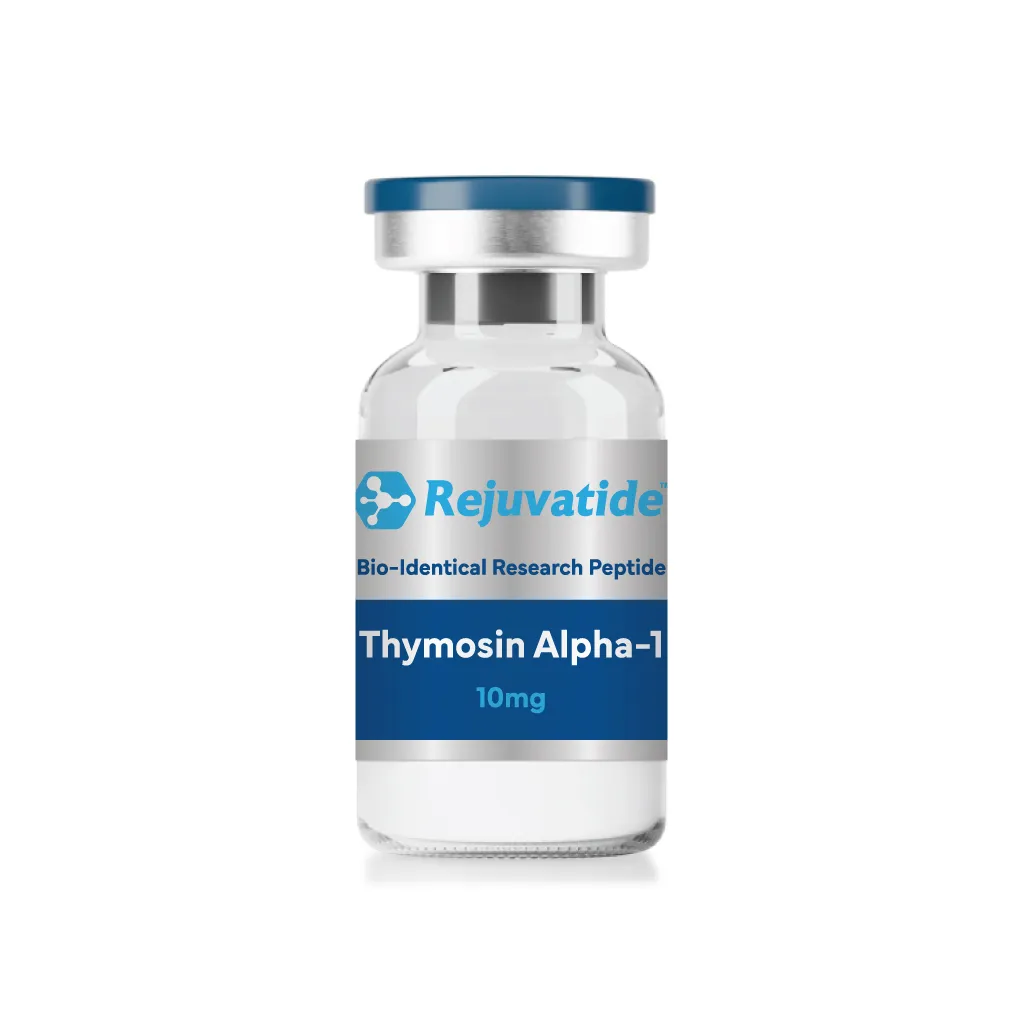
Chemical Name: Thymosin Alpha-1 Alternative Names: Tα1; Thymosin α1; Zadaxin (pharmaceutical brand) Amino Acid Sequence: Ac-SDAAVDTSSEITTKDLKEKKEVVEEAEN-OH Sequence Length: 28 amino acids Molecular Formula: C₁₂₉H₂₁₅N₃₃O₅₅ Molecular Weight: ~3,108 Daltons CAS Number: 62304-98-7 N-terminal Modification: Acetylated Purity: >98% (verified by HPLC and mass spectrometry) Form: Lyophilized (freeze-dried) powder Appearance: White to off-white powder Quantity: 10mg per vial Solubility: Soluble in sterile water, bacteriostatic water, and aqueous buffers
Each batch undergoes High-Performance Liquid Chromatography (HPLC) for purity determination (target: >98%), mass spectrometry for molecular weight confirmation (~3,108 Da) and verification of N-terminal acetylation, amino acid analysis for composition verification, and endotoxin testing (LAL assay, specification: <1.0 EU/mg). Lyophilized Powder Storage: Store at -20°C in original sealed vial, protected from light and moisture. Stable for 24-36 months when stored properly. Reconstitution: Use sterile water for injection, bacteriostatic water (0.9% benzyl alcohol), or sterile PBS (pH 7.2-7.4). Add solvent slowly; gently swirl until dissolved. Typical concentration: 0.5-2.0 mg/mL. Reconstituted Solution Storage: 2-8°C refrigerated; 7-14 days in sterile water, 14-30 days in bacteriostatic water. Aliquot into single-use portions to minimize freeze-thaw cycles (maximum 2-3 cycles).
T-Lymphocyte Research: T-cell activation and proliferation assays, CD4+ and CD8+ differentiation studies, IL-2 and IFN-γ production measurements (ELISA, flow cytometry), T-cell receptor signaling investigations, and regulatory T-cell modulation studies. Dendritic Cell Biology: Dendritic cell maturation marker expression (CD80, CD86, MHC-II), antigen presentation capacity assays, cytokine production profiling from DCs, and TLR pathway activation studies. Natural Killer Cell Research: NK cell cytotoxicity assays against tumor cell lines, perforin and granzyme expression analysis, and NK cell activation marker studies. PBMC Studies: Mixed lymphocyte reactions, mitogen-stimulated proliferation assays, cytokine secretion profiling, and multi-parameter flow cytometry for immune phenotyping.
Immunocompromised Models: Aged animal models (immunosenescence research), chemotherapy-induced immunosuppression models, radiation-induced immune dysfunction, and congenital immunodeficiency models. Infectious Disease Models: Viral infection models (influenza, herpes viruses), bacterial infection challenges, fungal infection studies, and assessment of survival, pathogen burden, and immune responses. Cancer Research Models: Tumor transplantation models (syngeneic, xenograft), spontaneous tumor models, assessment of tumor growth kinetics, tumor-infiltrating lymphocyte analysis, and combination studies with chemotherapy or immunotherapy. Vaccine Adjuvant Research: Enhancement of vaccine-induced antibody responses, T-cell response augmentation, studies in immunosenescent or immunocompromised subjects, and comparison with conventional adjuvants.
Animal Research: Institutional Animal Care and Use Committee (IACUC) protocol approval required. Compliance with Guide for Care and Use of Laboratory Animals, veterinary oversight, and humane endpoint monitoring. Human Subject Research: Institutional Review Board (IRB) approval mandatory. Investigational New Drug (IND) application to FDA required for unapproved uses in U.S. Research-grade peptides not intended for human administration.
Research Use Only: This product is intended exclusively for laboratory research purposes. It is not approved by the FDA or any regulatory authority for human or veterinary use, administration, ingestion, or injection, and is not intended to diagnose, treat, cure, or prevent any disease. Thymosin Alpha-1 10mg is provided solely for in vitro research and in vivo animal studies in controlled laboratory settings under appropriate institutional oversight. While pharmaceutical thymosin alpha-1 (Zadaxin) is approved in some countries for specific clinical indications, this research-grade product is not manufactured, labeled, or distributed for therapeutic applications. Researchers are responsible for ensuring compliance with all applicable local, state, federal, and international regulations.
Reviews
There are no reviews yet.