- Your cart is empty
- Continue Shopping

$80.00
38 in stock
PT-141, also known as Bremelanotide, is a synthetic cyclic heptapeptide analog of alpha-melanocyte-stimulating hormone (α-MSH) that functions as a melanocortin receptor agonist. Unlike phosphodiesterase-5 (PDE5) inhibitors that primarily act on vascular mechanisms, PT-141 targets the central nervous system, specifically melanocortin receptors in the hypothalamus, to modulate sexual arousal pathways [1,2].
Early preclinical studies in animal models demonstrated that melanocortin receptor activation, particularly at MC3R and MC4R subtypes, influenced sexual behavior and arousal responses [3,4]. Rodent studies showed dose-dependent increases in mating behaviors and neural activity in brain regions associated with sexual motivation following administration of melanocortin agonists [5].
PT-141 (as Bremelanotide) received FDA approval in 2019 under the brand name Vyleesi for the treatment of hypoactive sexual desire disorder (HSDD) in premenopausal women [6]. Clinical trials demonstrated statistically significant improvements in sexual desire and reductions in distress associated with low libido compared to placebo [7,8]. Human studies have been conducted primarily in female populations, with limited controlled trial data in male subjects for erectile dysfunction [9]. Off-label investigation in men has explored potential applications for erectile dysfunction, though robust clinical evidence comparable to established PDE5 inhibitor trials remains limited [10].
While FDA-approved for specific indications in women, PT-141’s safety profile includes documented adverse effects such as nausea (reported in approximately 40% of clinical trial participants), transient increases in blood pressure, flushing, and injection site reactions [7,8]. Long-term safety data beyond the clinical trial periods remains limited. Cardiovascular monitoring is recommended, particularly in individuals with pre-existing hypertension or cardiovascular conditions.
Research on PT-141 and melanocortin receptor modulation has explored several physiological domains: Central Nervous System Modulation: Clinical and preclinical evidence indicates PT-141 acts primarily through melanocortin receptor activation in hypothalamic regions involved in sexual arousal and motivation, bypassing peripheral vascular mechanisms [1,2,11]. This central mechanism distinguishes it from vascular-acting agents and may account for effects on subjective desire rather than solely mechanical function. Sexual Desire in Women: Controlled clinical trials in premenopausal women with HSDD demonstrated that PT-141 administration resulted in increased sexual desire scores and decreased distress related to low libido compared to placebo groups [7,8]. Response rates varied among participants, with approximately 25-35% of women achieving clinically meaningful improvements in validated assessment scales. Potential Male Applications: Limited human data exists for PT-141 use in male erectile dysfunction. Small exploratory studies have suggested potential erectogenic effects, though results have been inconsistent and lack the robust evidence base of established therapies [9,10]. The mechanism of action theoretically supports central arousal pathways in both sexes, but clinical validation in male populations remains incomplete. Non-Sexual Physiological Effects: Preclinical research has indicated that melanocortin receptor agonists may influence appetite regulation, energy homeostasis, and inflammatory pathways [12,13]. These effects have been observed primarily in animal models, and their clinical relevance to PT-141 administration in humans for sexual function remains unclear.
PT-141 is a synthetic peptide with a molecular weight of approximately 1,025 Daltons. It is administered via subcutaneous injection and exhibits peak plasma concentrations approximately 1 hour post-administration, with a half-life of approximately 2.7 hours [14]. Despite its relatively short plasma half-life, clinical effects on sexual desire have been reported to persist for 6-24 hours in some individuals, suggesting central nervous system effects outlast measurable plasma concentrations. The peptide’s structure is based on the melanocortin peptide family and was developed through modification of the naturally occurring α-MSH sequence to enhance receptor selectivity and metabolic stability [1].
PT-141 functions as an agonist at melanocortin receptors, with primary activity at MC3R and MC4R subtypes located in hypothalamic and limbic brain regions [2,15]. Activation of these receptors modulates neural circuits involved in sexual motivation, arousal, and reward processing. This central mechanism differs fundamentally from peripheral vasodilatory mechanisms employed by PDE5 inhibitors. Preclinical studies have demonstrated that MC4R activation specifically influences dopaminergic and oxytocinergic pathways associated with sexual behavior and pair bonding [4,16]. These neural pathways are hypothesized to underlie PT-141’s effects on subjective desire rather than purely mechanical sexual response.
Research suggests melanocortin signaling influences hypothalamic regulation of sexual function through complex interactions with gonadotropin-releasing hormone (GnRH) neurons and downstream hormonal cascades [17]. However, PT-141 administration does not appear to significantly alter circulating sex hormone levels in clinical studies, supporting its characterization as a centrally-acting agent rather than a hormonal modulator [7,8].
Clinical trials have documented transient increases in blood pressure and heart rate following PT-141 administration, attributed to melanocortin receptor activation in cardiovascular regulatory centers [7,8]. These effects are typically mild and resolve within hours but warrant caution in individuals with pre-existing cardiovascular disease or uncontrolled hypertension.
Preclinical research has explored melanocortin receptor involvement in appetite regulation, energy expenditure, and inflammatory modulation [12,13,18]. Animal studies have shown that MC4R agonism can influence feeding behavior and metabolic rate, though these effects have not been systematically characterized in human PT-141 clinical trials focused on sexual function.
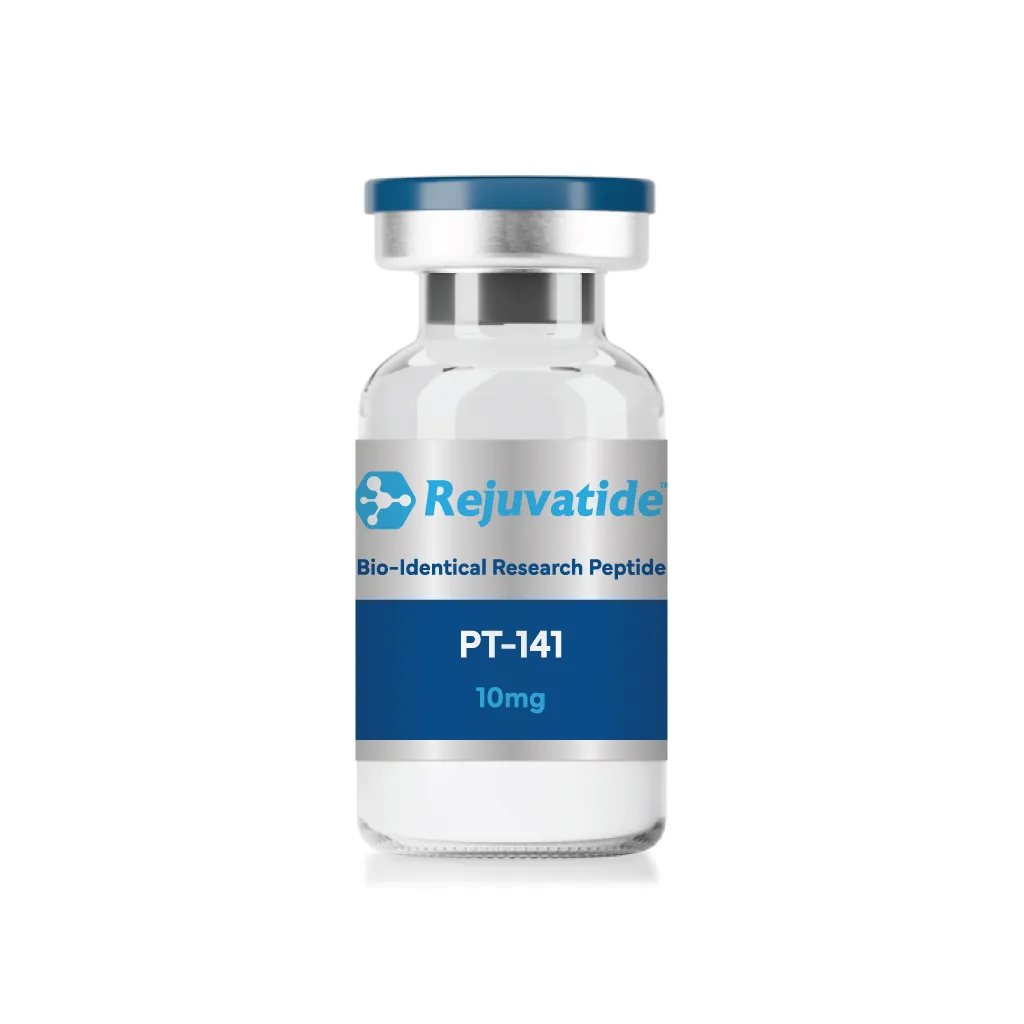
Chemical Name: Bremelanotide Molecular Weight: ~1,025 Daltons Purity: ≥98% (verified by HPLC and mass spectrometry) Form: Lyophilized powder Quantity: 10mg per vial
Research Use Only: This product is intended for laboratory research purposes only. It is not approved by the FDA or any regulatory authority for human or veterinary use, ingestion, or injection, and is not intended to diagnose, treat, cure, or prevent any disease. PT-141 10mg is provided solely for in vitro research and scientific investigation in controlled laboratory settings. While Bremelanotide (Vyleesi) is an FDA-approved prescription medication for specific indications, this research-grade product is not manufactured, labeled, or distributed for therapeutic use. Users are responsible for ensuring compliance with all applicable local, state, and federal regulations.
Q1: What is PT-141 10mg intended for? A: PT-141 10mg is intended exclusively for laboratory research purposes and scientific investigation of melanocortin receptor pathways. It is not approved for human consumption, self-administration, or clinical treatment outside of properly supervised clinical trials. While the pharmaceutical version (Vyleesi/Bremelanotide) is FDA-approved for specific medical indications, this research-grade product is provided only for experimental use in controlled laboratory environments.
Q2: Is PT-141 the same as the FDA-approved drug Vyleesi? A: While PT-141 (Bremelanotide) is the active ingredient in the FDA-approved medication Vyleesi, research-grade PT-141 10mg is not manufactured or distributed as a pharmaceutical product for therapeutic use. Vyleesi is specifically approved for treatment of hypoactive sexual desire disorder (HSDD) in premenopausal women and is available only by prescription through licensed healthcare providers. Research-grade peptides are not subject to the same manufacturing, quality control, and regulatory oversight as FDA-approved medications.
Q3: What does the clinical evidence show about PT-141’s effectiveness? A: Clinical trials in premenopausal women with HSDD demonstrated statistically significant improvements in sexual desire and reductions in related distress compared to placebo, leading to FDA approval in 2019. However, response rates varied, with approximately 25-35% of participants achieving clinically meaningful improvements. Evidence for use in male sexual dysfunction is limited to small exploratory studies without the robust clinical validation of established therapies. All clinical evidence pertains to pharmaceutical-grade Bremelanotide, not research-grade peptides.
Q4: Can researchers use PT-141 to study effects on sexual function in human subjects? A: Human subject research involving PT-141 would require institutional review board (IRB) approval, appropriate regulatory compliance (including IND applications if applicable), informed consent protocols, and adherence to Good Clinical Practice (GCP) guidelines. Research-grade peptides are not intended for administration to human subjects outside of properly authorized clinical trials. Researchers planning human studies should consult regulatory authorities and institutional compliance offices.
Q5: What are the known safety concerns associated with PT-141 based on clinical data? A: Clinical trials of pharmaceutical Bremelanotide reported adverse effects including nausea (approximately 40% of participants), transient blood pressure elevation, flushing, headache, and injection site reactions. Individuals with uncontrolled hypertension or significant cardiovascular disease were excluded from clinical trials due to potential cardiovascular effects. Long-term safety data beyond clinical trial durations remains limited. These safety profiles pertain to pharmaceutical products used under medical supervision and may not directly translate to research-grade compounds.
Reviews
There are no reviews yet.