- Your cart is empty
- Continue Shopping

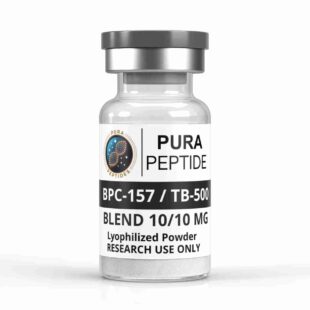
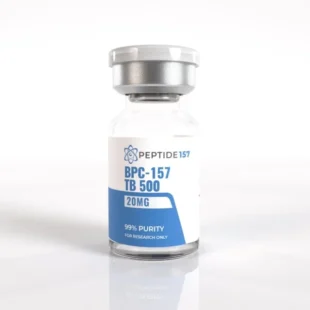
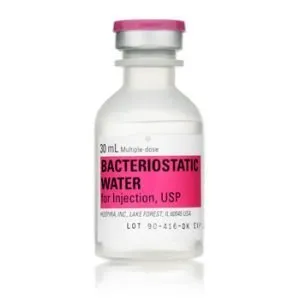
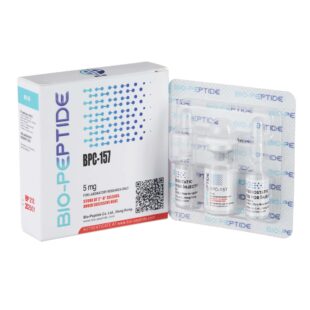
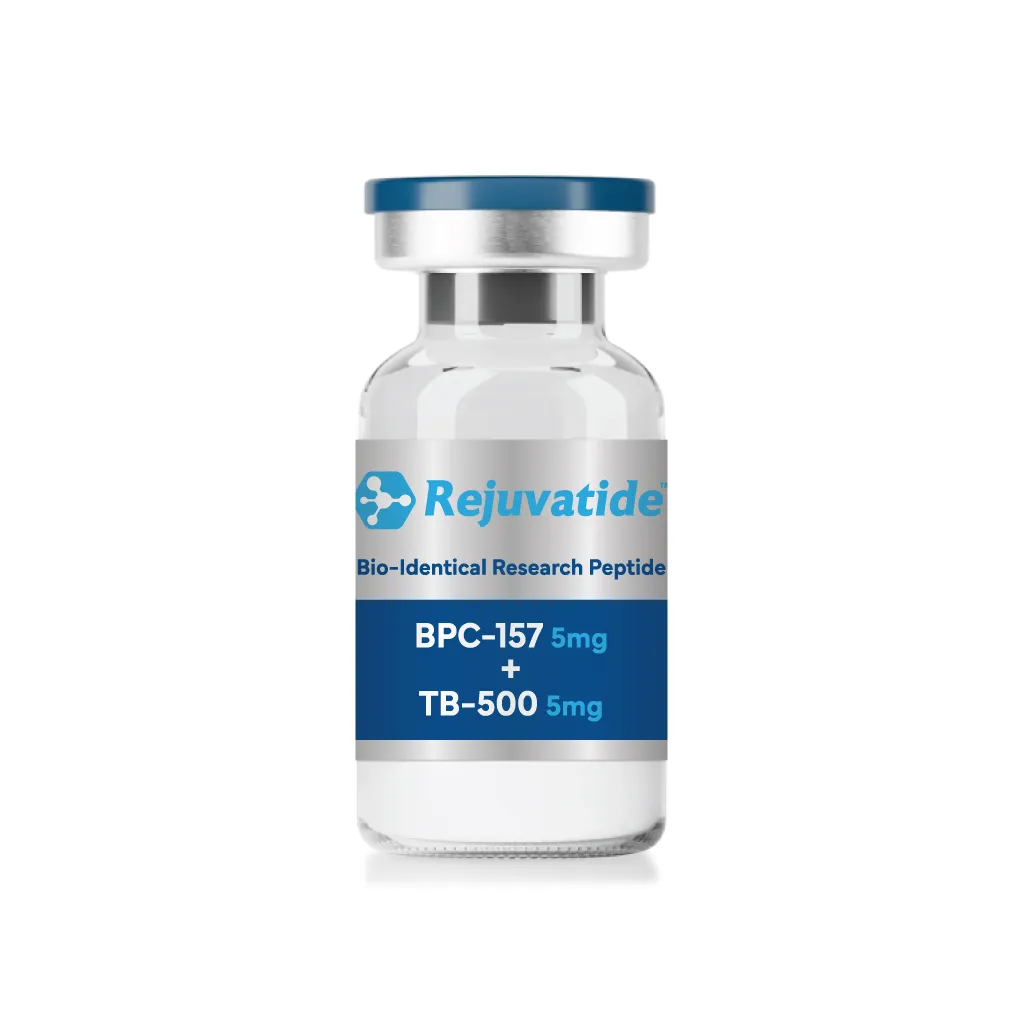
$120.00
35 in stock
BPC-157 and TB-500 (thymosin beta-4–derived fragment) have gained increasing attention in research settings for their regenerative and cytoprotective properties, particularly in models of musculoskeletal injury, vascular dysfunction, and organ damage.[1–4,7–11] While most data come from animal and in-vitro studies, a growing body of reviews and early clinical observations has highlighted their potential relevance for tissue repair, inflammation modulation, and recovery support.[1,5,6]
Animal studies have demonstrated that BPC-157 promotes angiogenesis, accelerates tendon and muscle healing, and may protect internal organs from damage.[1–4] For example, BPC-157 has been shown to speed healing of transected rat Achilles tendon and improve myotendinous junction recovery in muscle–tendon–ligament models.[2,3] Additional work suggests protective effects in gastrointestinal, vascular, and spinal cord injury models.[1,4]
TB-500, a synthetic fragment based on thymosin beta-4, has shown the ability to enhance wound closure, re-epithelialization, and tissue remodeling in preclinical models.[7–9] Thymosin beta-4 has been reported to increase angiogenesis, modulate inflammation, and favor more organized collagen deposition, supporting more functional tissue repair.[7–10]
Human clinical trials with BPC-157 and TB-500 remain limited, and most available data come from case reports, observational use, and small exploratory experiences. A recent narrative review in orthopaedic sports medicine describes BPC-157 as a promising but still experimental agent, with only early, small-scale human observations (e.g., chronic knee pain) reported to date and no large randomized controlled trials completed.[5,6] At present, no robust human outcome data exist for the BPC-157/TB-500 combination, and its potential applications in musculoskeletal injuries, post-surgical recovery, and chronic inflammation remain hypothesis-generating rather than proven.
BPC-157 and TB-500 are not approved by the FDA or other major regulatory bodies for medical use in humans. They are typically offered as research-use-only compounds, intended for laboratory, in-vitro, or preclinical work. Any discussion of potential benefits is based primarily on animal and in-vitro research, and further human clinical trials are required to clarify safety profiles, dosing ranges, and long-term efficacy.[1,5,6]
In preclinical animal and in-vitro models, BPC-157 and thymosin beta-4/TB-500 have been investigated for their ability to:
Accelerate healing of connective tissues (muscle, tendon, ligament, fascia)[1–4,7–9]
Enhance angiogenesis (new blood vessel formation) and support blood flow to injured tissues[1,2,5,7–9]
Influence nerve regeneration and neurological recovery in spinal cord and CNS injury models[4,11]
Protect and repair gastrointestinal mucosa and support gut barrier integrity[1]
Modulate inflammatory and fibrotic responses, potentially improving tissue quality and flexibility[3,8–10]
Support endothelial and vascular function via nitric-oxide–linked pathways[1,5]
Improve wound closure and post-injury tissue remodeling in skin, corneal, and musculoskeletal models[2,7,8]
Note: These findings are preclinical and may not translate directly to human outcomes. They are presented for research and educational purposes only.
The BPC-157 TB-500 10 mg Blend pairs two research peptides frequently studied together for their regenerative and healing potential:
BPC-157 (Body Protection Compound-157):
A synthetic pentadecapeptide derived from a gastric protective protein, investigated for cytoprotection, angiogenesis, and accelerated repair in multiple organ systems.[1–4]
TB-500 (thymosin beta-4 fragment):
A synthetic peptide based on thymosin beta-4, a naturally occurring peptide implicated in actin regulation, cell migration, wound healing, and extracellular matrix (ECM) remodeling.[7–10]
When evaluated together in experimental settings, these peptides appear to offer complementary actions—supporting both structural repair and cellular migration involved in tissue recovery.[1–4,7–10]
The BPC-157 TB-500 10 mg Blend is often explored for multi-pathway support of tissue repair, targeting:
Angiogenesis and microcirculation (BPC-157, thymosin beta-4)[1,2,5,7–9]
Cell migration and actin dynamics (thymosin beta-4/TB-500)[7–9]
Inflammation and fibrosis modulation (both peptides in various models)[1,3,8–10]
This dual focus on vascular integrity and cellular movement underpins ongoing research into their combined effects on recovery processes.
BPC-157 has been shown in animal and in-vitro studies to:
Modulate the nitric oxide (NO) system, impacting vasodilation and vascular tone[1,5,9]
Promote angiogenesis in muscle and tendon healing models[1,2]
Accelerate healing of gastrointestinal mucosa, skin, and ligament injuries[1–3]
Exhibit neuroprotective effects in models of spinal cord and CNS injury[4,11]
These actions collectively position BPC-157 as a cytoprotective and pro-healing peptide in preclinical research.[1–5,11]
Thymosin beta-4 and its research analogs (including TB-500) have been studied for:
Enhancing cell migration and actin polymerization, critical for wound closure and tissue regeneration[7–9]
Promoting re-epithelialization and corneal/skin wound healing[7,8,15]
Reducing inflammation and fibrotic remodeling, leading to more organized collagen and less rigid scar tissue[8–10,27]
Influencing extracellular matrix (ECM) turnover and cytokine signaling in multiple tissues[9,10]
These mechanisms may help explain the improved flexibility, reduced scarring, and enhanced structural repair observed in animal models.[7–10]
When evaluated together, BPC-157 and thymosin beta-4/TB-500 may provide:
Pro-angiogenic support (BPC-157) paired with enhanced cell migration and ECM remodeling (TB-500)[1–3,7–10]
Joint modulation of inflammatory and fibrotic pathways, potentially supporting more functional tissue repair[1,3,8–10]
Multilevel support for vascular, connective tissue, and neural structures in diverse injury models[1–4,7–11]
Again, these effects are preclinical and require rigorous human trials before any clinical conclusions can be drawn.
Collagen is a primary structural protein in tendons, ligaments, cartilage, fascia, and skin, and is central to joint function and load-bearing capacity. Optimizing collagen organization and turnover is a key target in many tissue repair and sports-medicine strategies.
Preclinical studies suggest that BPC-157 and thymosin beta-4:
Stimulate fibroblast migration and activity, cells responsible for collagen synthesis and matrix repair[2,3,7–9]
Support more orderly collagen fiber alignment and reduced fibrotic scarring in healing tissues[3,8–10]
In research settings, these combined effects have been associated with improved mechanical properties of healing tendons, ligaments, and other connective tissues.[2,3,7–10]
The extracellular matrix (ECM) provides the structural scaffolding around cells and coordinates signals for growth, repair, and remodeling. Balanced ECM turnover is crucial for joint integrity, muscle recovery, and overall tissue resilience.
Investigators have reported that:
BPC-157 may promote angiogenesis and microvascular stability within damaged tissue, contributing to ECM preservation and repair.[1–3,5]
Thymosin beta-4 can modulate matrix metalloproteinases (MMPs), tissue inhibitors of metalloproteinases (TIMPs), and cytokines, influencing ECM remodeling and inflammation balance.[8–10,15]
Together, these actions appear to support ECM integrity and remodeling in experimental injury models, which may be especially relevant to high-demand or load-bearing tissues.[1–3,7–10]
Research Use Only:
This product is intended for laboratory research purposes only. It is not approved for human or veterinary use, ingestion, or injection, and is not intended to diagnose, treat, cure, or prevent any disease.
Reviews
There are no reviews yet.