- Your cart is empty
- Continue Shopping

$200.00
51 in stock
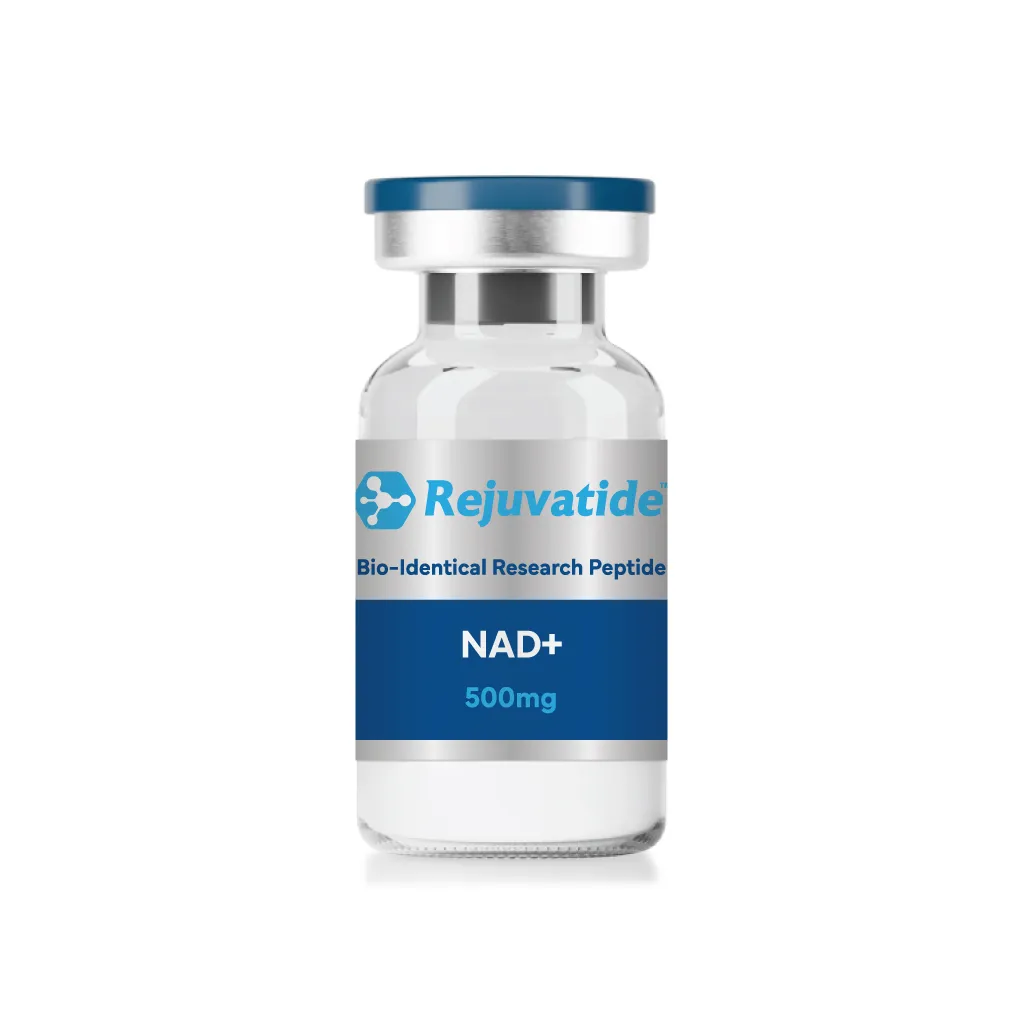
Nicotinamide adenine dinucleotide (NAD+) is a ubiquitous coenzyme found in all living cells that serves as a critical electron carrier in redox reactions and plays essential roles in cellular metabolism, DNA repair, and gene expression [1,2]. The oxidized form (NAD+) and reduced form (NADH) constitute a redox couple central to glycolysis, the citric acid cycle, and oxidative phosphorylation, making NAD+ fundamental to cellular energy production [3]. NAD+ levels decline with aging in multiple tissues and organisms, a phenomenon that has generated substantial research interest in NAD+ supplementation and precursor molecules as potential interventions for age-related decline and metabolic dysfunction [4,5]. As a research tool, NAD+ and its precursors (nicotinamide riboside, nicotinamide mononucleotide) have been extensively studied in preclinical models and increasingly in human clinical trials.
Animal studies have demonstrated that NAD+ depletion occurs with aging across multiple species, including rodents, and that restoration of NAD+ levels through supplementation with precursors can improve various markers of metabolic health [6,7]. In mouse models, NAD+ precursor supplementation has been associated with improved mitochondrial function, enhanced exercise capacity, improved glucose metabolism, and extended healthspan in some experimental paradigms [8,9,10]. Rodent studies have shown that NAD+ precursors can activate sirtuins (NAD+-dependent deacetylases) and poly(ADP-ribose) polymerases (PARPs), enzymes involved in DNA repair, stress resistance, and metabolic regulation [11,12]. Research in aged mice demonstrated that boosting NAD+ levels improved markers of muscle function, protected against age-related weight gain, and enhanced insulin sensitivity [13,14]. In vitro studies using cultured cells have characterized NAD+’s roles in mitochondrial function, showing that NAD+ availability influences oxidative phosphorylation efficiency, mitochondrial membrane potential, and cellular ATP production [15,16]. Cell culture research has also demonstrated NAD+’s involvement in DNA damage response pathways and cellular stress resistance mechanisms [17].
Metabolic Health Studies: Clinical trials examining NAD+ precursor supplementation (primarily nicotinamide riboside and nicotinamide mononucleotide) in humans have produced mixed results. Some studies in overweight or obese adults showed improvements in insulin sensitivity and metabolic markers [18,19], while other trials found limited metabolic effects despite successfully increasing NAD+ levels [20,21]. Cardiovascular Research: Clinical studies have investigated NAD+ precursors’ effects on vascular function and blood pressure. Research in middle-aged and older adults demonstrated that nicotinamide riboside supplementation improved markers of arterial stiffness and reduced systolic blood pressure in some participants [22,23]. However, effects varied considerably across individuals and studies. Neurocognitive Function: Clinical trials examining cognitive effects of NAD+ precursor supplementation have generally shown modest or inconsistent results. While some studies reported subjective improvements in fatigue or mental clarity, objective cognitive performance measures have not consistently demonstrated significant benefits [24,25]. Exercise Performance: Human studies investigating NAD+ precursors’ effects on exercise capacity and muscle function have produced variable results. Some research showed improvements in aerobic capacity or muscle endurance in specific populations [26], while other trials found minimal effects on exercise performance markers [27].
Clinical trial data for NAD+ precursor supplementation demonstrates substantial heterogeneity in outcomes, likely reflecting differences in populations studied, dosing protocols, baseline NAD+ status, and outcome measures assessed. Most human studies have used NAD+ precursors (nicotinamide riboside, nicotinamide mononucleotide) rather than NAD+ itself due to bioavailability considerations, as direct oral NAD+ supplementation faces significant absorption challenges [28,29]. Safety data from clinical trials generally indicate good tolerability of NAD+ precursors at doses ranging from 250-2000mg daily, with adverse effects typically mild (nausea, flushing, headache) when reported [30,31]. However, long-term safety data beyond 12 months remains limited. NAD+ is not FDA-approved as a therapeutic agent, though precursor forms are available as dietary supplements in some jurisdictions.
NAD+ serves as an essential coenzyme in glycolysis, the citric acid cycle, and the electron transport chain, making it central to cellular ATP production [3,32]. Research has characterized how NAD+ availability influences mitochondrial respiration efficiency, with studies showing that NAD+ depletion impairs oxidative phosphorylation while NAD+ restoration can enhance mitochondrial function in experimental models [15,33]. Animal studies demonstrated that NAD+ precursor supplementation increased mitochondrial biogenesis markers, improved mitochondrial membrane potential, and enhanced fatty acid oxidation in various tissues including skeletal muscle, liver, and brain [9,34]. These mitochondrial effects have been hypothesized to contribute to improved metabolic health and exercise capacity observed in some preclinical studies.
NAD+ is a required substrate for poly(ADP-ribose) polymerases (PARPs), enzymes that detect and respond to DNA damage [35,36]. Research has shown that PARP activation during DNA repair consumes substantial cellular NAD+, and that chronic DNA damage can deplete NAD+ pools [37]. Animal studies indicated that boosting NAD+ levels enhanced DNA repair capacity and reduced accumulation of DNA damage in aged tissues [38]. Cell culture research demonstrated that NAD+ availability influences base excision repair, nucleotide excision repair, and double-strand break repair pathways [17,39]. These findings have generated interest in NAD+ supplementation as a potential strategy to support genomic stability during aging, though human validation remains limited.
Sirtuins are NAD+-dependent deacetylases that regulate numerous metabolic processes, stress responses, and aging-related pathways [40,41]. Seven mammalian sirtuins (SIRT1-7) have been identified, with different subcellular localizations and target proteins. Research has shown that cellular NAD+ levels influence sirtuin activity, with NAD+ depletion reducing sirtuin function [42]. Animal studies demonstrated that increasing NAD+ levels through precursor supplementation activated sirtuins and produced metabolic effects similar to caloric restriction, including improved insulin sensitivity, enhanced mitochondrial function, and increased stress resistance [11,43]. SIRT1 activation has been particularly studied for effects on hepatic lipid metabolism, muscle glucose uptake, and adipose tissue function [44,45].
Research has identified connections between NAD+ metabolism and circadian clock function. Studies showed that NAD+ levels oscillate with circadian rhythms, and that NAD+ influences the activity of SIRT1, which regulates circadian clock proteins [46,47]. Animal research demonstrated that disruption of NAD+ biosynthesis altered circadian rhythms, while NAD+ supplementation could modulate circadian gene expression [48]. The enzyme NAMPT (nicotinamide phosphoribosyltransferase), which catalyzes the rate-limiting step in NAD+ salvage pathways, exhibits circadian expression patterns and has been identified as a link between metabolism and circadian regulation [49]. This research has implications for understanding metabolic disorders associated with circadian disruption.
Preclinical research has investigated NAD+’s roles in immune cell function and inflammatory responses. Studies in macrophages and other immune cells showed that NAD+ influences inflammatory cytokine production, with NAD+ depletion generally associated with increased inflammation [50,51]. Animal models of inflammatory conditions demonstrated that NAD+ precursor supplementation reduced markers of systemic inflammation and improved outcomes in some disease models [52]. Research has also examined NAD+’s roles in maintaining immune cell metabolism and function. Studies showed that NAD+ is required for proper T-cell activation and that NAD+ depletion impairs immune responses [53]. However, the relationship between NAD+ and inflammation appears complex and context-dependent.
Animal studies have extensively investigated NAD+’s potential neuroprotective effects. Research in rodent models of neurodegeneration showed that boosting NAD+ levels reduced neuronal loss, improved mitochondrial function in neurons, and enhanced cognitive performance in aged animals [54,55]. Studies in Alzheimer’s disease models demonstrated that NAD+ precursor supplementation reduced amyloid pathology and improved memory function [56]. Cell culture research using neuronal cells indicated that NAD+ supports neuronal survival under stress conditions, enhances neurite outgrowth, and protects against excitotoxicity and oxidative damage [57,58]. These mechanisms have been hypothesized to contribute to neuroprotective effects, though translation to human cognitive benefits remains uncertain based on current clinical evidence.
Preclinical research has characterized NAD+’s roles in vascular endothelial function and cardiovascular aging. Animal studies showed that NAD+ precursor supplementation improved endothelium-dependent vasodilation, reduced arterial stiffness, and protected against age-related vascular dysfunction [59,60]. Research indicated these effects may involve activation of SIRT1 in endothelial cells, leading to increased nitric oxide production and reduced oxidative stress [61]. Studies in mouse models of atherosclerosis demonstrated that NAD+ supplementation reduced plaque formation and improved vascular remodeling [62]. Research has also examined NAD+’s potential protective effects in cardiac tissue, with animal studies showing improved cardiac function following ischemic injury in NAD+-supplemented animals [63].
Nicotinamide adenine dinucleotide consists of two nucleotides joined through their phosphate groups. One nucleotide contains an adenine base and the other nicotinamide. NAD+ exists in two forms: the oxidized form (NAD+) which accepts electrons, and the reduced form (NADH) which donates electrons [1,2]. This redox couple is fundamental to cellular metabolism. NAD+ has a molecular weight of 663.43 Daltons (oxidized form) and serves multiple biochemical functions beyond redox reactions. It acts as a substrate for enzymes including sirtuins, PARPs, and CD38/CD157 (NAD+ glycohydrolases), making it a critical signaling molecule in addition to its metabolic roles [64,65].
Mammals synthesize NAD+ through multiple pathways. The de novo pathway starts from tryptophan and proceeds through the kynurenine pathway to generate NAD+ [66]. The Preiss-Handler pathway converts nicotinic acid (niacin) to NAD+ through several enzymatic steps [67]. Most importantly for NAD+ maintenance, the salvage pathway recycles nicotinamide (the product of NAD+-consuming enzymes) back to NAD+ through the rate-limiting enzyme NAMPT [68]. Research has shown that the salvage pathway is the primary route for NAD+ biosynthesis in most tissues under normal conditions [69]. NAD+ precursors including nicotinamide riboside (NR) and nicotinamide mononucleotide (NMN) can bypass NAMPT and enter NAD+ biosynthesis through alternative routes, which has made them attractive research tools and potential supplements [70,71].
Multiple studies have documented that NAD+ levels decline with aging across tissues and species. Research in rodents, primates, and humans has shown age-related decreases in NAD+ concentrations in liver, muscle, brain, adipose tissue, and other organs [4,5,72]. Proposed mechanisms for this decline include:
This age-related NAD+ decline has been hypothesized to contribute to mitochondrial dysfunction, reduced sirtuin activity, impaired DNA repair, and other aging-related changes, making NAD+ restoration a research focus in geroscience.
Reviews
There are no reviews yet.