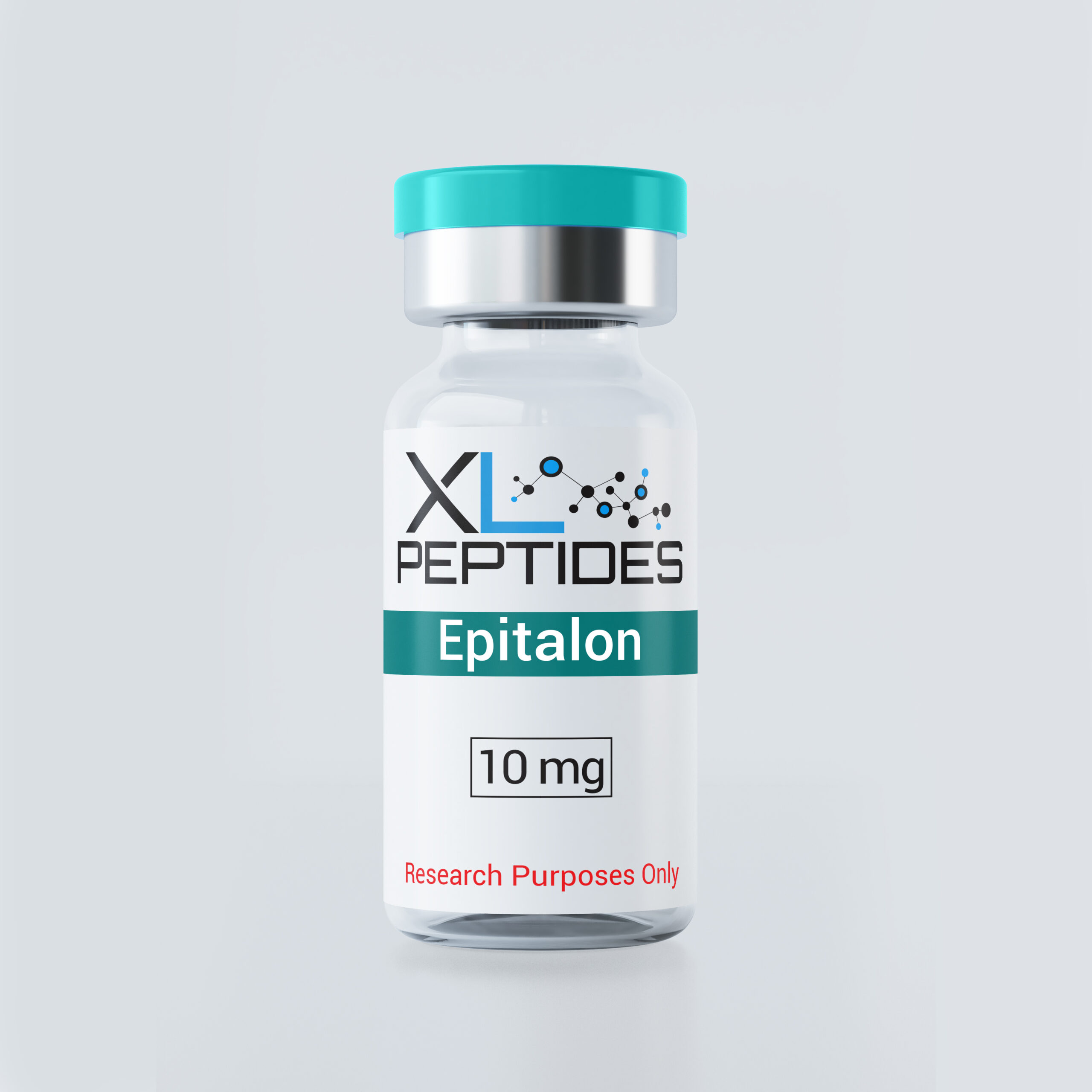
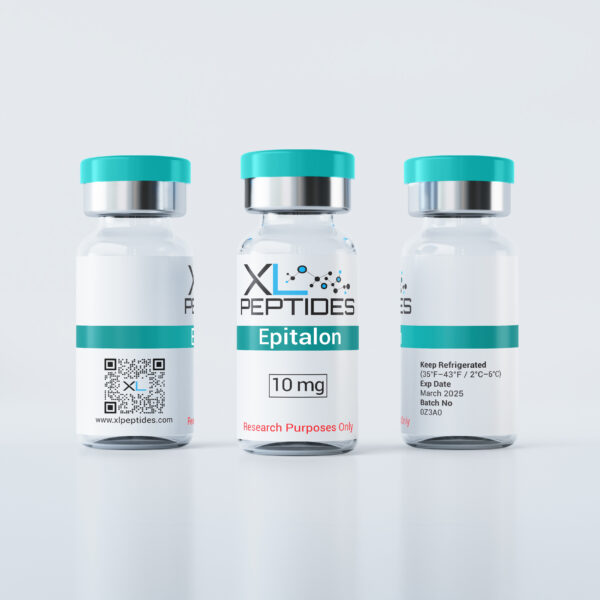
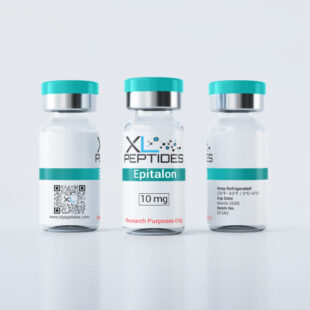
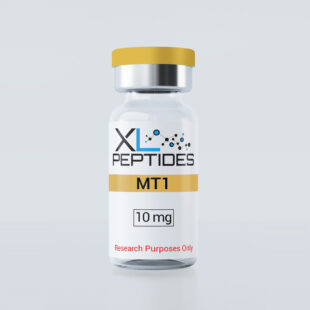
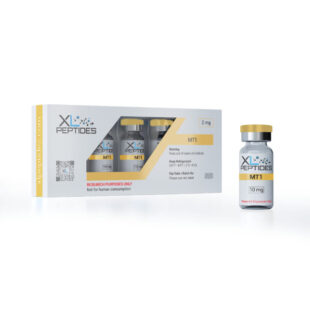
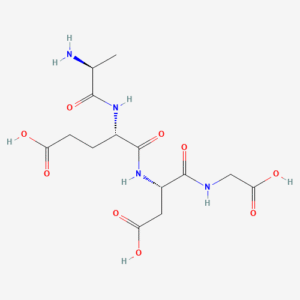
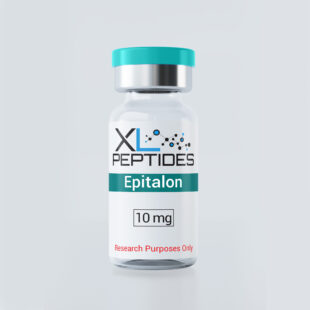
Epitalon is a synthetic tetrapeptide (Ala–Glu–Asp–Gly; AEDG) used in controlled in-vitro research to explore telomere biology pathways, cellular senescence markers, and circadian-related peptide signalling under non-clinical conditions.
Epitalon — 10 mg
This short peptide’s compact sequence makes it useful for model-system studies of nucleic-acid and chromatin-associated pathways, as well as peptide–receptor signalling in cell culture. All investigations are performed in laboratory settings only.
For laboratory research only. Not for human use.
Epitalon Key features
- Tetrapeptide (AEDG) for in-vitro studies of telomere-related pathways and cellular ageing markers.
- Supplied as a lyophilised solid for stability and straightforward storage.
- Unit size: 10 mg per vial.
- Each batch released only after stringent quality checks.
Specifications

- Product name: Epitalon
- Synonyms: Epithalon; AEDG tetrapeptide; Epithalamin (related extract; not identical)
- Sequence: Ala–Glu–Asp–Gly (A-E-D-G)
- Molecular formula (reference, free base): C14H22N4O9
- Molecular weight (reference, free base): ~390.35 g/mol
- CAS (reference): 307297-39-8
- Form: Lyophilised powder
- Appearance: White to off-white solid
- Note: Exact values may vary by counterion/hydration state.
Handling & storage
- Storage (dry): Keep vials protected from light and moisture.
- Reconstitution: Bring vial and diluent to room temperature. Reconstitute with
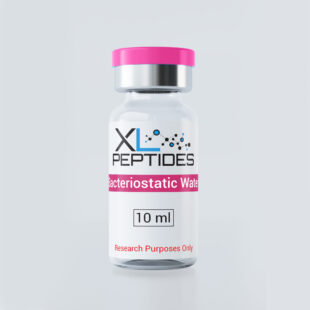
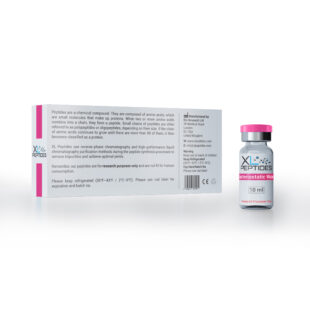
Bacteriostatic Water 10 ml. Swirl gently—do not vortex. - After reconstitution: Store at 2–8 °C, protect from light, use aliquots to reduce handling, and avoid repeated temperature cycling.
- Compatibility: Use only within research protocols that follow your lab’s SOPs and local regulations.
Looking for complementary materials? See
Bacteriostatic Water 10 ml and mitochondrial/aging research companions such as
SS-31 10 mg and
GHK-Cu 50 mg.
Reviews
There are no reviews yet.