- Your cart is empty
- Continue Shopping


7 Best Peptides for Recovery
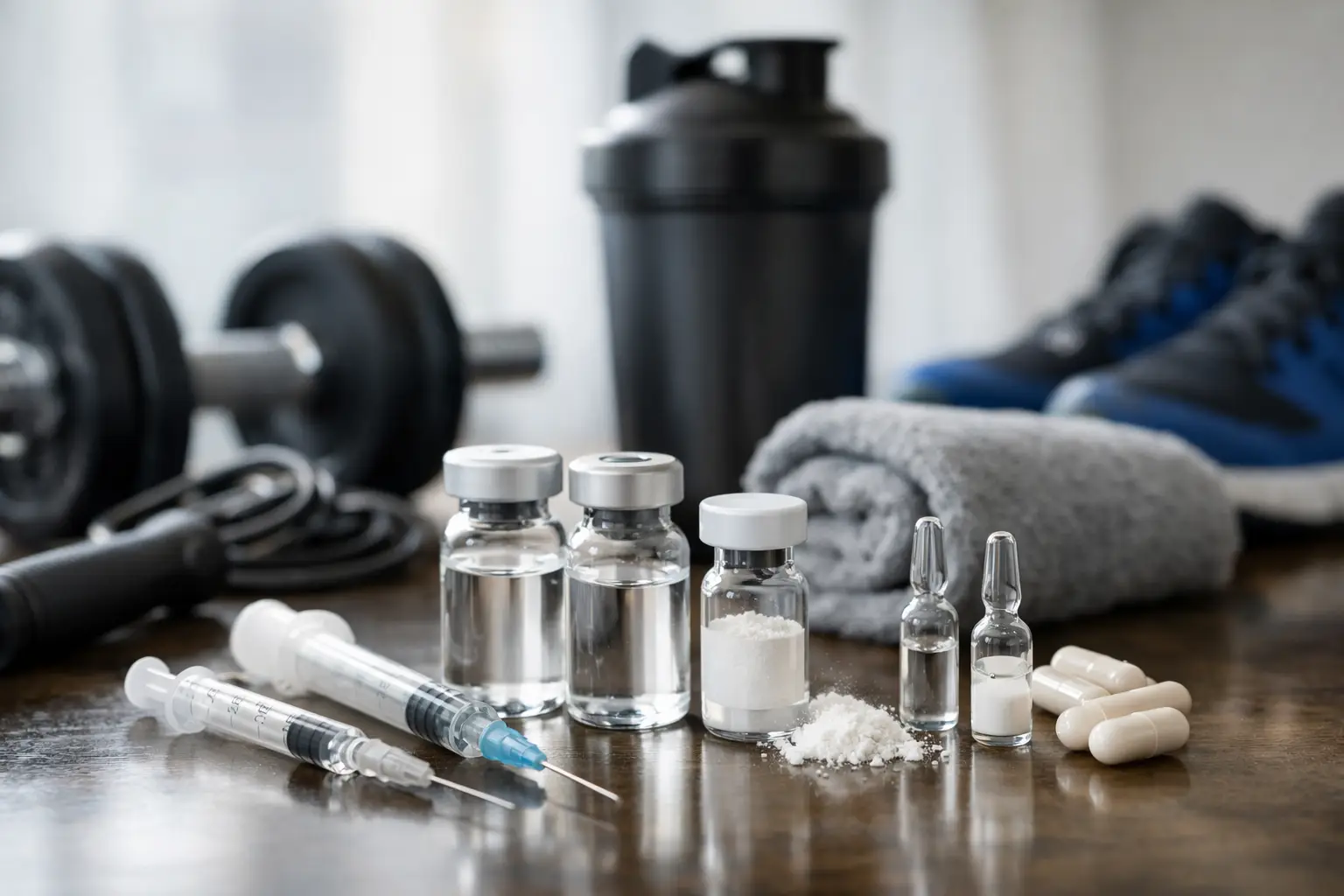
A sore joint that lingers for weeks, soft tissue that never seems to calm down, training fatigue that outlasts the workload – this is where the search for the best peptides for recovery usually starts. For experienced buyers, the real question is not whether a peptide is popular. It is whether the compound fits the recovery goal, the sourcing is verified, and the batch quality is documented.
Recovery is a broad category, and that is where many buyers get sloppy. Some peptides are discussed for connective tissue support. Others are used in research tied to muscle repair, systemic recovery, inflammation signaling, or sleep-related restoration. Grouping them together without context leads to bad decisions. If you are comparing compounds seriously, you need to match the peptide to the job.
What counts as the best peptides for recovery?
The best peptides for recovery are not always the most marketed ones. They are the compounds that align with a specific research objective, have a consistent reputation in the category, and come from a supplier with real quality controls – third-party testing, current COAs, sterile handling standards, and clear manufacturing documentation.
That last part matters more than buyers sometimes admit. A recovery peptide with weak sourcing is not a smart buy at any price. In this market, purity claims without verification are just marketing. Serious U.S. buyers tend to look for endotoxin-free standards, transparent batch testing, GMP-aligned manufacturing, and fulfillment reliability because all of that reduces risk before the vial even arrives.
BPC-157 remains the first name most buyers check
BPC-157 is still one of the most searched recovery compounds for a reason. In peptide research circles, it is consistently associated with soft tissue interest, tendon-related discussion, and localized recovery applications. It has become the default starting point for buyers focused on physical recovery rather than metabolic or cognitive outcomes.
Its appeal is straightforward. It is widely recognized, broadly discussed, and easy to compare across suppliers. That also creates a downside – because demand is high, low-quality inventory shows up everywhere. If you are evaluating BPC-157, documentation matters more than branding. Batch-level verification and transparent COAs should carry more weight than flashy claims.
For many researchers, BPC-157 is the practical baseline. It is not automatically the best choice for every recovery protocol, but it is often the first compound worth evaluating.
TB-500 is often considered alongside BPC-157
TB-500 is frequently discussed in the same breath as BPC-157, but the two are not interchangeable. Buyers usually look at TB-500 when the recovery objective is broader and less localized. In market terms, it is often positioned as a systemic recovery compound rather than a narrowly targeted one.
That distinction is part of why some experienced buyers compare the two rather than choosing blindly. BPC-157 may be preferred for more site-specific research goals, while TB-500 is often discussed in relation to overall repair support and mobility-related recovery. The trade-off is that expectations can get inflated. A more systemic reputation does not mean a better fit in every case.
When buyers choose TB-500, they should be especially strict about source quality. Category popularity has created a lot of inconsistency, and recovery compounds are only as credible as the testing behind them.
Best peptides for recovery from intense training
If the recovery goal centers on repeated hard training blocks, compounds tied to growth hormone signaling often enter the conversation. That is where CJC-1295 and Ipamorelin are commonly evaluated, either individually or as part of a combined research approach.
CJC-1295 is often discussed for its role in growth hormone-related pathways, while Ipamorelin is typically referenced for more selective signaling without some of the broader receptor activity buyers may want to avoid. In practical buying terms, this category attracts performance-oriented users looking beyond injury-specific research and toward restoration, sleep quality, tissue turnover, and training tolerance.
The trade-off is that these are not usually the first compounds people choose for a very specific tendon or soft tissue concern. They sit in a different lane. If your focus is recovery capacity across a heavy training cycle, they may make more sense. If your focus is a single stubborn area, they may not be the first place to start.
This is where experience matters. The best compound depends on whether the problem is acute tissue stress, chronic wear, poor sleep-driven recovery, or general under-recovery from workload.
Tesamorelin has a narrower recovery role
Tesamorelin is not usually the first peptide named in a basic recovery list, but advanced buyers still watch it closely. Its discussion is often tied more to body composition and growth hormone-related effects than direct injury recovery. Still, some researchers evaluating restoration and performance support consider it relevant depending on the broader protocol goal.
That means Tesamorelin can be useful in the right context and a poor fit in the wrong one. If the goal is straightforward connective tissue research, it may not rank at the top. If the goal includes physique-related recovery variables or advanced hormone-support strategies, it may deserve attention.
This is exactly why blanket rankings are weak. A peptide can be high quality, well known, and still not be the right answer for your recovery objective.
GHK-Cu gets attention for repair and tissue quality
GHK-Cu tends to attract buyers interested in tissue appearance, skin-related support, and broader repair signaling. It lives in a slightly different part of the peptide conversation because it is often discussed for regenerative and cosmetic-adjacent research, not just performance recovery.
That does not make it irrelevant. In fact, it may be one of the more interesting options for buyers who think about recovery beyond muscle soreness alone. Tissue quality, healing environment, and repair signaling all affect how recovery is perceived. GHK-Cu enters the picture when that broader lens matters.
The practical caution is sourcing and formulation quality. With GHK-Cu, handling standards and product integrity are critical. Buyers should not assume every listing on the market is equivalent.
Thymosin Alpha-1 and systemic resilience
Thymosin Alpha-1 is often discussed more in immune and systemic resilience categories than in direct sports recovery. Even so, some advanced buyers include it when recovery is being affected by broader physiological stress. If the issue is not just tissue stress but also poor resilience, high load, or repeated recovery setbacks, it can become part of the conversation.
This is not the most obvious pick for a standard recovery stack, and that is the point. Recovery is not always about one strained area. Sometimes the limiting factor is how the system is handling stress overall. In those cases, compounds outside the usual muscle-repair shortlist may be worth reviewing.
NAD+ support compounds can matter indirectly
NAD+ and related compounds are not usually marketed as direct recovery peptides, but experienced buyers often look at them because energy production and cellular function shape recovery outcomes. If fatigue, poor output, and slow bounce-back are part of the bigger picture, indirect support categories deserve attention.
This is where inexperienced buyers can overcomplicate things. Not every low-energy phase needs a broad stack. Sometimes the best move is narrowing the goal and choosing one or two well-matched compounds with strong documentation rather than mixing categories without a clear rationale.
How serious buyers compare recovery compounds
The fastest way to waste money in this market is to shop by label hype alone. Experienced buyers tend to compare recovery peptides using three filters: intended use case, consistency of category reputation, and supplier verification standards.
Use case comes first. A compound discussed for connective tissue support is not automatically the strongest option for systemic fatigue or growth hormone-linked recovery. Reputation comes next, but only within the right category. Then comes verification – arguably the deciding factor when multiple compounds look viable.
That means checking whether the seller provides current third-party COAs, whether sterility and endotoxin standards are clearly addressed, and whether the manufacturing story is precise rather than vague. Reliable same-day fulfillment, discreet shipping, and responsive support also matter because they signal operational discipline. Core Peptides Meds appeals to this market because buyers in this space want proof, not guesswork.
The real answer to the best peptides for recovery
If you want a short answer, BPC-157 and TB-500 remain the most commonly compared recovery compounds, while CJC-1295 and Ipamorelin are often evaluated when recovery is tied to training load, sleep, and overall restoration. GHK-Cu, Tesamorelin, Thymosin Alpha-1, and NAD+-related options each make sense in narrower scenarios.
That is the part many articles skip: narrower scenarios. There is no single winner that covers every recovery problem well. The best choice depends on whether you are researching localized tissue support, systemic repair, training tolerance, or full-spectrum restoration.
The smartest buyers do not chase the loudest peptide. They choose the compound that matches the objective, then they verify the source like quality is the whole game – because in this category, it usually is.

https://addlinks.pro/7Cutr
https://addlinks.pro/0ngwc
https://addlinks.pro/fMGYb