- Your cart is empty
- Continue Shopping


How Sterile Peptides Are Packaged
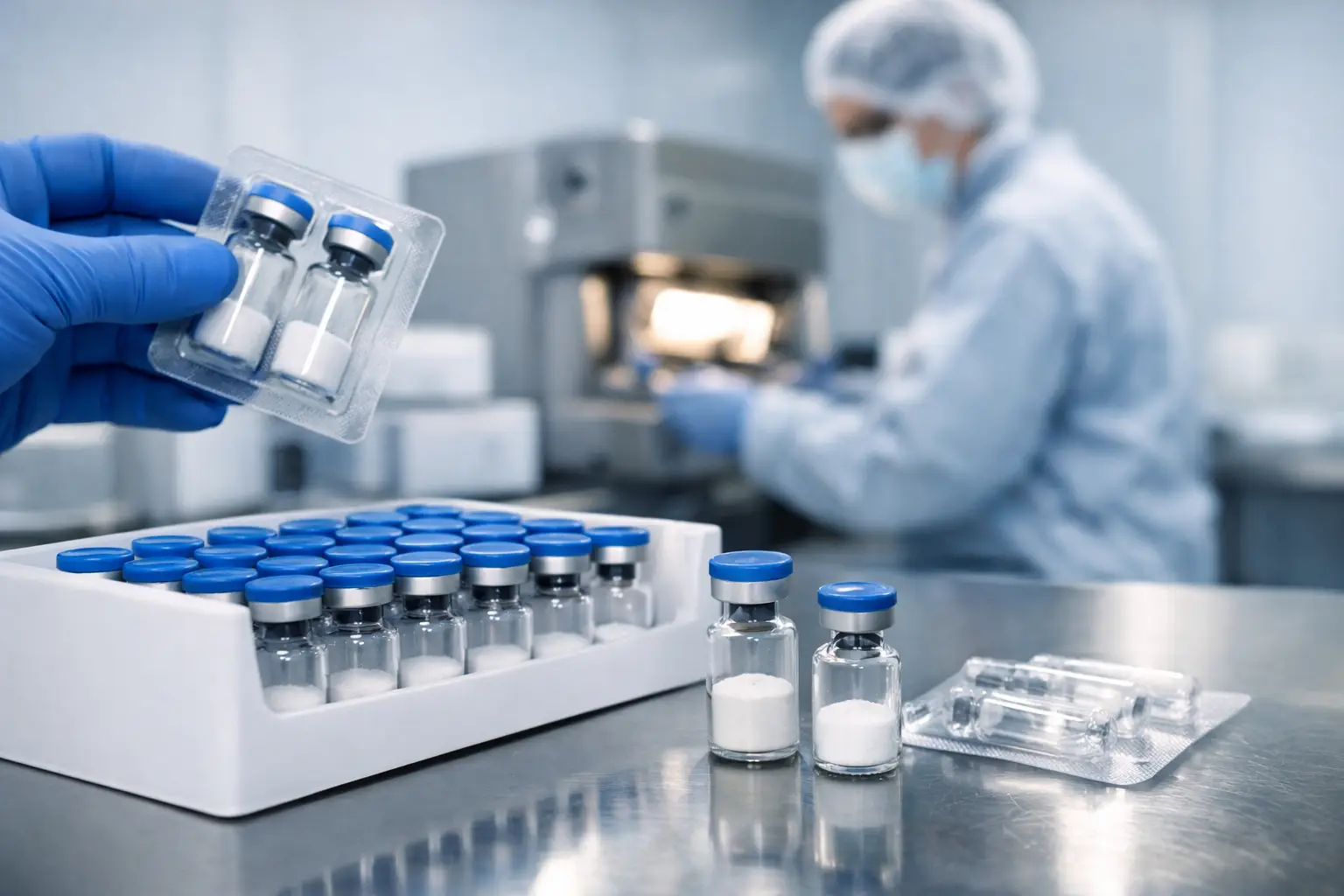
If you are evaluating peptide quality, packaging is not a minor detail. How sterile peptides are packaged directly affects sterility assurance, product stability, traceability, and how much confidence you should place in the supplier behind the label.
In this market, claims are easy. Packaging is where process discipline shows up. A sterile peptide is not simply dropped into a vial, capped, and shipped. It moves through a controlled sequence designed to limit contamination, preserve integrity, and keep every unit tied to a specific batch with verifiable documentation.
How sterile peptides are packaged in practice
For most research peptides, sterile packaging starts after synthesis and purification are complete. At that stage, the material has already gone through upstream quality controls, but packaging introduces its own risk points. Every transfer, fill step, stopper placement, and seal has to be handled under controlled conditions because sterility can be lost late in the process just as easily as early.
The standard format is a sterile glass vial with a lyophilized peptide cake or powder inside. In some cases, peptides may be packaged in sterile solution, but lyophilized presentation is usually preferred for stability. Removing water helps reduce degradation risk during storage and transport, especially for compounds that are sensitive to hydrolysis or temperature variation.
That distinction matters. A peptide can test clean at one point in production and still become compromised if the final fill and finish process is weak. Serious buyers know the difference between a peptide that was manufactured carefully and one that was packaged with the same level of control.
Aseptic filling and controlled environments
Sterile peptide packaging typically takes place in cleanroom conditions using aseptic technique. That means the environment, equipment, container components, and personnel practices are all controlled to reduce microbial and particulate contamination. Depending on the manufacturing setup, packaging may occur in classified cleanroom spaces with laminar airflow hoods or isolator systems.
Before filling begins, vials, stoppers, and seals are prepared to meet sterile processing standards. The peptide material is then dispensed into sterile containers in measured quantities that match the intended labeled amount. Precision matters here for obvious reasons, but contamination control is the bigger issue. A supplier can advertise purity all day long, but if fill operations are poorly controlled, that number does not tell the full story.
In well-run operations, environmental monitoring, equipment qualification, and batch record documentation support the packaging step. That does not mean every product on the market is produced to the same standard. It means experienced buyers should look for suppliers that can demonstrate process discipline, not just marketing language.
Why lyophilized vial packaging is the industry standard
Freeze-drying, or lyophilization, is one of the most common ways sterile peptides are packaged because it protects product integrity better than many liquid formats. After the peptide solution is filled into sterile vials, it may be freeze-dried under controlled conditions to remove water while maintaining peptide structure.
The result is the familiar dry cake or powder seen in many research peptide vials. This format is easier to store, generally more stable over time, and less vulnerable during shipping than a ready-to-use liquid. For buyers concerned with consistency, that is a meaningful advantage.
There are trade-offs. Lyophilized peptides still require correct handling after delivery, and reconstitution introduces a new step where user technique matters. But from a packaging standpoint, the dry sterile vial is usually the stronger choice when the goal is long shelf life and reduced degradation risk.
Stoppering, crimp sealing, and container closure integrity
Once the peptide is filled or lyophilized, the vial is closed with a sterile stopper and secured with an aluminum crimp seal. This is more than a finishing touch. Container closure integrity is one of the key barriers protecting the material from outside contamination, moisture ingress, and handling damage.
A properly sealed vial should remain closed and stable through storage, transport, and routine handling. If the stopper fit is poor or the crimp is inconsistent, sterility and stability can be affected. That is one reason packaging quality often tells you more about the supplier than the label design ever will.
Glass choice also matters. Sterile peptides are commonly packaged in borosilicate glass vials because they offer chemical resistance and reliable performance under pharmaceutical-style handling conditions. Lower-quality packaging components can create avoidable risks, particularly in temperature-variable shipping environments.
Labeling and batch traceability are part of the package
Sterile peptide packaging is not complete when the vial is sealed. Labeling is part of the quality system. A professional package should identify the compound, strength or fill amount, batch or lot number, and in many cases storage guidance or a use-by date. Without that information, traceability is weak.
Batch traceability is especially important for buyers who want to verify third-party testing or compare one lot to another. If a supplier offers certificates of analysis, those records need to connect clearly to the packaged product in hand. A vial without a reliable lot reference makes that process harder and raises immediate questions.
This is where operational credibility separates serious suppliers from the rest of the field. Transparent labeling, accessible COAs, and consistent batch documentation are not extras. They are part of what a trustworthy sterile packaging process looks like.
Secondary packaging and shipment protection
After the vial itself is packaged, secondary packaging is used to protect the product in transit. This may include carton packaging, protective inserts, tamper-evident elements, and shipping materials intended to reduce breakage, temperature stress, and handling exposure.
Discreet shipping matters for many buyers, but protective shipping matters more. A sterile vial that arrives cracked, poorly cushioned, or exposed to avoidable heat has already failed the reliability test. Good fulfillment is part of good packaging because sterile product integrity has to survive the trip, not just the production line.
Temperature sensitivity depends on the peptide. Some compounds tolerate shipping stress better than others, while certain products may benefit from colder handling or faster movement through the fulfillment chain. There is no one-size-fits-all answer, which is why serious operations build packaging and logistics around the specific product profile instead of treating every vial the same.
What buyers should look for when asking how sterile peptides are packaged
If you are comparing vendors, the right question is not just whether a peptide is labeled sterile. Ask how sterile peptides are packaged and what controls support that claim. The answer should point to cleanroom handling, aseptic fill processes, high-quality vial components, validated closure systems, and batch-level testing documentation.
It should also include evidence of broader quality standards. GMP-certified or GMP-compliant manufacturing claims, ISO-certified lab testing, endotoxin testing, and third-party COAs all reinforce the credibility of the packaged product. None of those items alone guarantee quality, but together they create a stronger trust signal.
Be cautious with suppliers that speak in generalities. If the packaging story is vague, the process behind it may be vague too. Buyers in this category are not looking for lifestyle branding. They are looking for a trusted source with controls that hold up under scrutiny.
At Core Peptides Meds, that expectation is exactly why quality language has to be backed by documentation, sterility standards, and fulfillment discipline. In a crowded peptide market, clean packaging and verified batch support are not cosmetic details. They are part of the product.
Common misconceptions about sterile peptide packaging
One common mistake is assuming that sterile means invincible. It does not. Sterile packaging reduces contamination risk, but poor storage, heat exposure, broken seals, or improper reconstitution can still compromise the product later.
Another misconception is that all sterile vials are packaged to the same standard. They are not. Two suppliers can sell the same named compound in the same size vial and have very different quality controls behind the fill, seal, testing, and shipment process.
The third mistake is focusing only on purity percentages. High purity is valuable, but it is not the whole story. A well-packaged peptide needs purity, sterility assurance, endotoxin control, proper closure, and traceable documentation working together.
For serious buyers, sterile peptide packaging is one of the clearest indicators of whether a supplier is operating with real standards or just polished claims. If the vial, seal, label, and batch support all reflect disciplined handling, that is a much stronger sign that the product was built to perform as expected. When packaging looks careless, it usually is.
