- Your cart is empty
- Continue Shopping


Why Endotoxin Free Peptides Matter
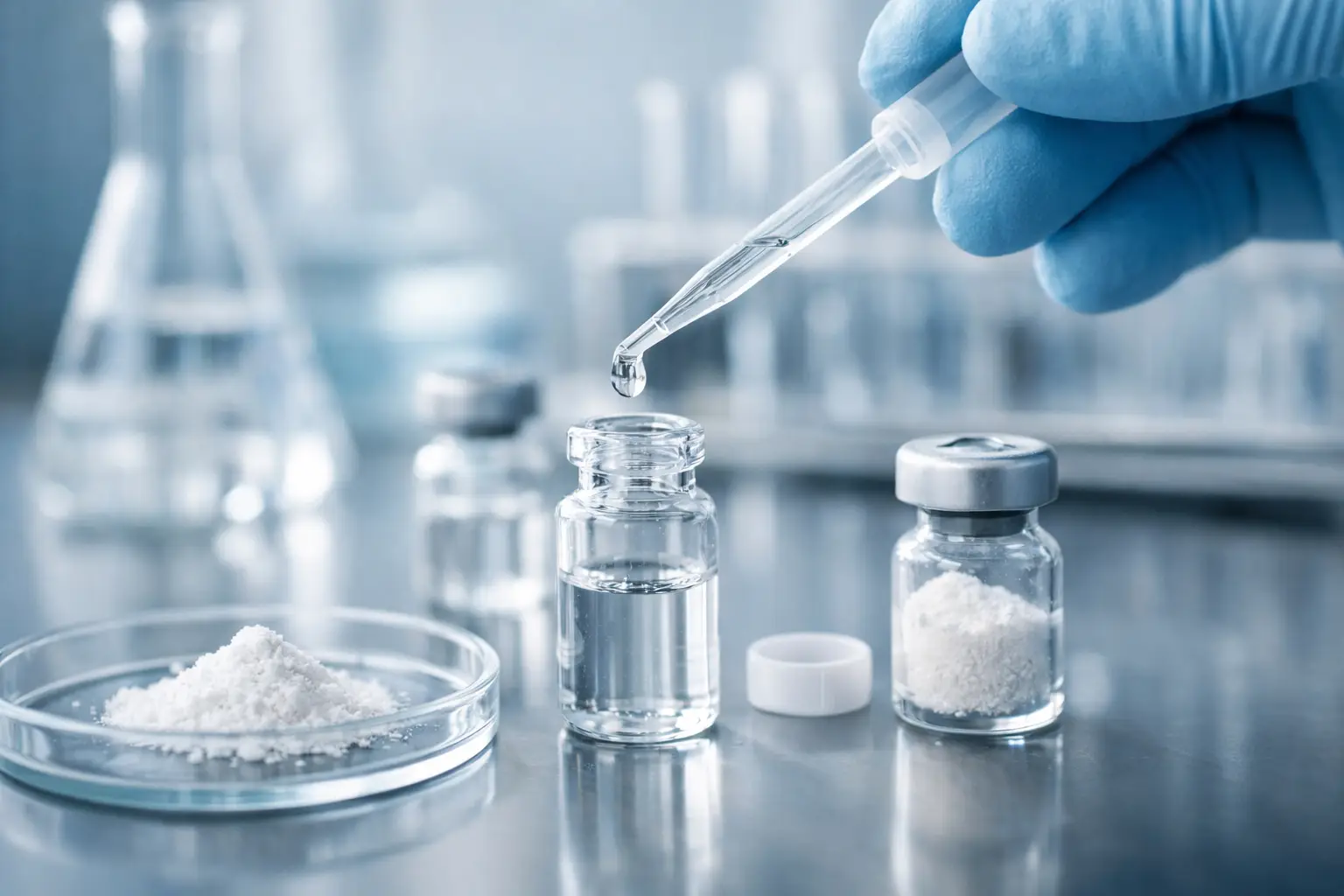
A peptide can look clean on paper and still create bad data. That is the problem with endotoxin contamination. For serious buyers, endotoxin free peptides are not a marketing extra. They are a quality baseline that directly affects research consistency, handling confidence, and supplier credibility.
In a market full of vague purity claims, endotoxin control separates disciplined manufacturing from basic relabeling. If you are sourcing for peptide research, assay prep, or bulk inventory, this detail matters because endotoxins can interfere with results even when the peptide itself tests at high purity. A 99 percent purity figure does not cancel out poor sterile handling or weak environmental controls.
What endotoxin free peptides actually mean
Endotoxins are lipopolysaccharides that come from the outer membrane of gram-negative bacteria. When contamination happens during manufacturing, filling, or packaging, the peptide may still appear visually fine while carrying residues that compromise downstream use. That is why endotoxin free peptides are defined by more than appearance and more than a simple purity percentage.
The phrase usually signals that the product has been manufactured and tested to control bacterial endotoxin levels below a specified threshold. The exact threshold matters, and so does the method used to verify it. Serious suppliers do not stop at broad wording. They back the claim with batch-specific documentation, controlled production environments, and third-party laboratory review.
For experienced buyers, this is where the conversation gets more specific. You are not just asking whether a peptide is pure. You are asking whether the batch was produced under conditions that reduce contamination risk from the start and whether that claim is independently verified after production.
Why endotoxin free peptides matter in real purchasing decisions
The practical value is straightforward. Lower endotoxin burden supports cleaner research conditions and reduces the chance that contamination introduces noise, variability, or misleading outcomes. If you are comparing suppliers, endotoxin control is one of the clearest indicators that a company takes quality systems seriously.
This matters even more when you are buying lyophilized peptides, blends, or larger quantities for repeat use. One inconsistent batch can cost more than the original order value once you factor in wasted time, repeat purchases, and damaged confidence in the source. Buyers who know the space do not want to gamble on a cheap vial that arrives fast but lacks credible testing.
There is also a trust issue. Plenty of sellers advertise high purity without showing how the product was made, how it was tested, or whether endotoxins were measured at all. A supplier that emphasizes endotoxin free peptides alongside third-party COAs, sterile process controls, and transparent batch verification is sending a stronger signal. It is telling you the operation is built around controlled quality, not just aggressive front-end marketing.
Purity is not the same as endotoxin control
This is where many buyers get tripped up. HPLC purity and endotoxin status are related to quality, but they are not interchangeable. A peptide can test well for identity and purity while still carrying endotoxin contamination from poor handling, water quality problems, equipment issues, or weak cleanroom discipline.
That distinction matters because some vendors lean hard on a single test result. They show a chromatogram and expect the buyer to assume everything else is covered. It is not. Purity confirms one part of the quality picture. Endotoxin testing addresses a different risk entirely.
If you are evaluating a peptide source, the stronger approach is to look for multiple proof points working together. Identity testing, purity analysis, sterility standards, endotoxin testing, and batch traceability should form one quality system. When those pieces are missing or fragmented, the product may still be sellable, but it is harder to call it premium with a straight face.
How reliable suppliers control endotoxin risk
Endotoxin reduction starts long before the finished vial is labeled. It begins with raw material handling, water quality, equipment sanitation, environmental monitoring, and disciplined manufacturing workflows. Suppliers that work with GMP-certified or GMP-compliant facilities are generally in a better position to maintain these controls, although the label alone is not enough without supporting documentation.
Testing is the second layer. Endotoxin free peptides should be tied to measurable verification, often through recognized endotoxin assays performed by qualified laboratories. Third-party testing carries more weight than internal claims because it reduces obvious conflicts of interest. ISO-certified labs and batch-level COAs give buyers something real to review instead of generic promises.
Packaging and fulfillment also matter more than some buyers realize. A clean batch can still be compromised by poor final handling, weak storage discipline, or careless repackaging. That is why operational reliability is part of quality, not separate from it. Same-day fulfillment sounds like a convenience feature, but when paired with controlled inventory practices, it also suggests a supplier that knows how to move product without introducing unnecessary risk.
What to look for before you buy
The fastest way to screen a peptide supplier is to look past the headline claim and check the evidence. If a seller says the product is endotoxin free, there should be documentation that supports that statement. Ideally, the COA is batch specific, easy to access, and issued by a credible third-party lab. If you have to chase basic verification through multiple emails, that is already telling you something.
You should also pay attention to how the company talks about manufacturing. Terms like GMP-certified facilities, FDA-registered manufacturers, sterile processing, and ISO-certified lab testing are useful when they are specific and consistently presented. They are less useful when they appear as random buzzwords with no connection to the actual product listing or batch data.
A strong supplier will also be clear about fulfillment, support, and issue resolution. That may sound secondary to lab quality, but it is not. Experienced buyers know that responsive human support matters when you need documentation, bulk pricing, or clarification on a lot number. Reliable operations reduce friction and build confidence, especially for repeat buyers and wholesale customers.
The trade-off between price and verified quality
Not every buyer needs the same level of documentation, and not every product category carries the same sourcing risk. But when a peptide is offered at a steep discount with limited transparency, the trade-off is usually obvious. Lower pricing can be attractive, especially for larger orders, but the savings disappear fast if the batch arrives with weak paperwork or questionable handling standards.
This does not mean the highest price always equals the best quality. It means verified quality should be visible. A supplier that combines competitive pricing with third-party COAs, endotoxin-free standards, transparent sourcing claims, and dependable fulfillment is offering actual value. That is a stronger position than simply charging more and assuming the market will trust the label.
For buyers who purchase repeatedly, consistency usually matters more than chasing the lowest one-time price. The real cost is not just what you pay at checkout. It is what unreliable quality does to your timeline, confidence, and reordering decisions.
Why serious buyers keep coming back to documented quality
The peptide market is crowded, and a lot of sellers look similar at first glance. Product names overlap. Purity claims sound familiar. Shipping promises are everywhere. What keeps experienced buyers loyal is not flashy language. It is repeatable proof.
Endotoxin free peptides are part of that proof because they show attention to contamination control, not just product labeling. When that standard is paired with accessible COAs, third-party testing, discreet shipping, and fast order processing, the buying decision becomes simpler. You are not just purchasing a peptide. You are choosing whether the source behaves like a serious operation.
That is why buyers who care about consistency tend to prefer suppliers that make verification easy and keep support accessible. Core Peptides Meds fits that model by focusing on tested quality, transparent documentation, and fulfillment reliability that serious peptide buyers expect.
The best purchasing decisions usually come from one simple rule: if a supplier claims premium quality, the evidence should be easy to see before you ever place the order.
